Synonym for Reuse: 8 Top Alternatives for Repurposing (synonym for reuse)
Explore 8 top synonym for reuse options—from repurposing to upcycling. Learn meanings, see examples, and boost your sustainability vocabulary today.
In a world increasingly focused on sustainability, the word 'reuse' often serves as a general catch-all. While its intention is good, relying on this single term can oversimplify the diverse and innovative ways we extend the life of products and materials. The concepts of recycling, repurposing, and upcycling are becoming more mainstream, but the broader language of the circular economy offers an even richer and more precise vocabulary. Understanding the specific nuances of each synonym for reuse is crucial for clear communication, whether you're a student writing a research paper, a marketer crafting a sustainability message, or a business professional developing an eco-friendly strategy.
This guide moves beyond the basics to explore eight essential alternatives to 'reuse'. We will break down their distinct meanings, provide practical, real-world applications, and highlight the unique value each concept brings to the table. For anyone aiming to make a tangible environmental impact, mastering this terminology is the first step. You'll learn not just how to talk about sustainability with greater accuracy, but also how to implement these practices more effectively. Prepare to transform your understanding of what it means to give an object a second, third, or even fourth life.
1. Recycle
While "reuse" implies using an item again in its original form, recycle refers to the process of transforming waste materials into new products. It's a foundational concept in sustainability, focusing on breaking down used items like plastic, glass, paper, and metal to create raw materials for manufacturing. This industrial process is a powerful synonym for reuse because it gives old materials a second life, albeit in a completely different form.
This method significantly conserves natural resources, reduces energy consumption, and prevents valuable materials from ending up in landfills. Organizations like the Environmental Protection Agency (EPA) have championed recycling for decades, establishing it as a cornerstone of modern waste management.
When to Use "Recycle"
The term "recycle" is most appropriate when discussing the transformation of waste. It highlights a specific, technical process rather than the simple act of using something again. It fits perfectly in contexts related to environmental policy, manufacturing, and consumer waste habits.
Key Insight: Use "recycle" to describe the end-of-life process for single-use or damaged items that can be reprocessed. Unlike reuse, which extends an item's current life, recycling begins a new life cycle for the material itself.
Actionable Tips for Effective Recycling
To ensure your recycling efforts are impactful, follow these best practices:
- Check Local Guidelines: Recycling rules vary significantly by municipality. Always check your local waste management's website to see which materials are accepted.
- Clean and Dry: Contamination is a major issue in recycling streams. Rinse out food and drink containers and let them dry before placing them in the bin.
- Separate Components: If an item is made of multiple materials (like a spray bottle with a pump), separate them if possible, as they may be processed differently.
- Support Innovative Programs: For hard-to-recycle items like coffee pods or chip bags, look into programs from companies like TerraCycle, which specialize in processing complex waste streams.
2. Repurpose
While reuse means using an item again for its original purpose, repurpose involves creatively adapting an object for a completely new function. This popular synonym for reuse champions ingenuity, transforming something that has served its initial role into a valuable new asset. It’s a core practice in DIY and crafting communities, where items like old wine bottles become candle holders, wooden pallets are converted into rustic furniture, and t-shirts are made into tote bags.
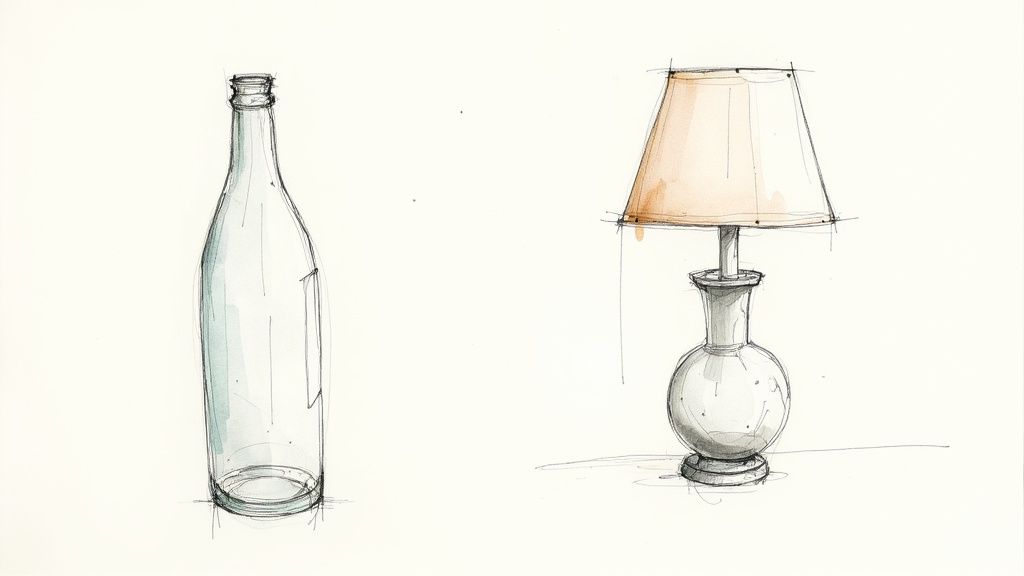
Repurposing keeps items out of the landfill by extending their lifespan in a different capacity, often with minimal industrial processing. This approach not only saves resources but also adds personal and aesthetic value to otherwise discarded objects. The concept is especially relevant for electronics. If you're looking for practical ways to give your tech a second life, consider these 10 impactful ideas for repurposing old desktop computers.
When to Use "Repurpose"
"Repurpose" is the perfect term when an item’s function is fundamentally changed. It implies a creative or practical transformation rather than simple continued use. The term is widely used in contexts related to home decor, DIY projects, upcycling, and sustainable living. It's also applicable in digital contexts, such as adapting a blog post into a video script, a concept explored in content repurposing strategies.
Key Insight: Use "repurpose" when an object's form is largely maintained, but its original purpose becomes obsolete. It highlights a creative second life, distinguishing it from both using something again as-is (reuse) and breaking it down into raw materials (recycle).
Actionable Tips for Effective Repurposing
To get the most out of your repurposing projects, follow these tips:
- Assess Item Properties: Before starting, evaluate the material’s durability, safety, and suitability for its new role. A glass jar, for instance, is great for storage but not for something requiring flexibility.
- Research DIY Ideas: The internet is a treasure trove of inspiration. Search platforms like Pinterest or YouTube for tutorials and creative ideas for the specific item you want to repurpose.
- Consider Function and Aesthetics: Plan how the final product will look and work. Will it need painting, sealing, or structural reinforcement to fit its new environment and purpose?
- Document and Share: Turn your project into content. Documenting the transformation with photos or videos can inspire others and is popular content on social media.
3. Upcycle
While reuse maintains an item's original purpose, upcycle refers to creatively transforming waste materials or unwanted products into new items of better quality or higher environmental value. This concept is a powerful synonym for reuse because it doesn't just give an item a second life; it elevates it. Upcycling combines recycling with innovation, turning trash into treasure.
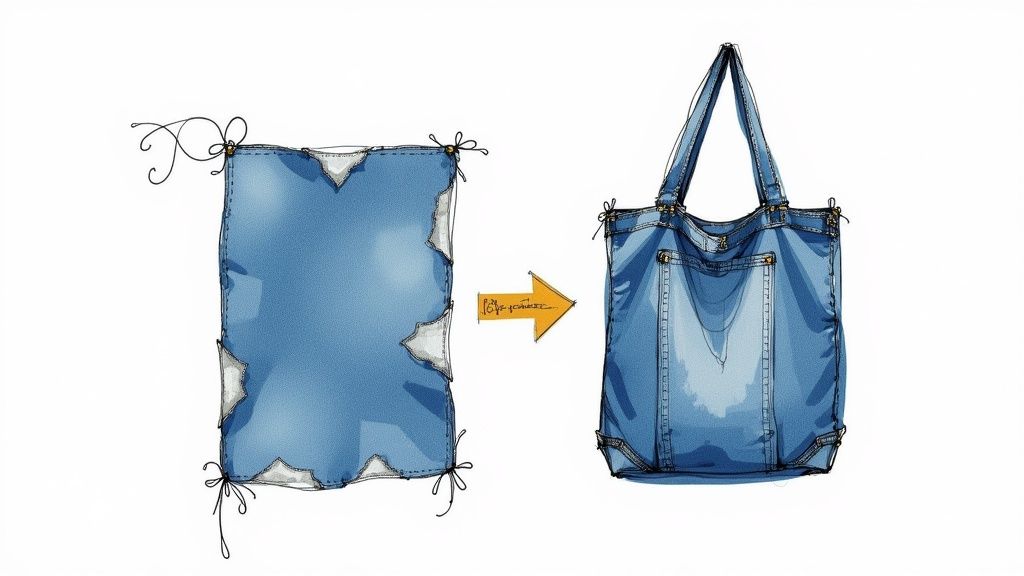
This process champions creativity and resourcefulness, reducing the need for new raw materials while diverting waste from landfills. Brands like Patagonia, which creates new apparel from discarded textiles, and Adidas, with its shoes made from reclaimed ocean plastic, have popularized upcycling on a global scale. The result is often unique, high-value products with a compelling sustainability story.
When to Use "Upcycle"
The term "upcycle" is best used when discussing the creative transformation of waste into a higher-value product. It is ideal for contexts related to sustainable fashion, eco-friendly design, DIY projects, and innovative manufacturing. It emphasizes improvement and artistry, not just utility.
Key Insight: Use "upcycle" when an old item is not just reused but fundamentally changed into something better, whether in aesthetics, function, or quality. It highlights a value-add process that goes beyond simple repurposing.
Actionable Tips for Effective Upcycling
To successfully transform waste into something wonderful, focus on these key strategies:
- Source Quality Materials: Start with discarded items that are durable and versatile, like old furniture, denim, or glass bottles, to ensure the final product is well-made.
- Invest in Craftsmanship: The difference between repurposing and upcycling often lies in the skill applied. Invest time in learning techniques or collaborating with artisans to elevate the final product.
- Tell the Story: Document the transformation process. Consumers are often drawn to the narrative behind an upcycled item, which adds to its perceived value and appeal.
- Enhance Your Narrative: Clearly explaining the environmental and creative benefits is crucial. For those looking to articulate this value effectively, an AI text enhancer can help refine product descriptions and marketing stories to better connect with eco-conscious audiences.
4. Refurbish
While reuse can mean simply using an item again as-is, refurbish involves a more intensive process of restoring a used, returned, or damaged product to a like-new condition. This synonym for reuse is common in the electronics and furniture industries, where products are professionally inspected, cleaned, repaired, and have worn components replaced. It’s a powerful method for extending a product's lifecycle and offering consumers high-quality items at a reduced cost.
This approach gives products a second chance, diverting them from landfills and reducing the demand for new manufacturing. Major retailers like Apple, Best Buy (through Geek Squad), and Amazon (with its Renewed program) have popularized refurbishment, creating a trusted market for items that perform as well as their brand-new counterparts.
When to Use "Refurbish"
The term "refurbish" is ideal when describing the professional restoration of a complex product. It implies a level of technical repair and quality assurance that goes beyond simple reuse. Use it in contexts involving electronics, appliances, office equipment, or any item that requires functional and cosmetic improvements before being resold.
Key Insight: Use "refurbish" to signify a product has been brought back to a specific performance and quality standard. Unlike basic reuse, refurbishment adds value and often comes with a warranty, bridging the gap between used and new.
Actionable Tips for Choosing Refurbished Products
To make a smart and sustainable purchase, follow these tips when buying refurbished goods:
- Purchase from Certified Programs: Stick to manufacturer-certified or reputable retailer programs (like Apple Certified Refurbished or Amazon Renewed) to ensure high standards and quality control.
- Check Warranty Coverage: A trustworthy refurbished product should come with a warranty. Carefully review the length and terms to understand what is covered.
- Request a Detailed History: If possible, ask for a report on what repairs or replacements were made. This transparency helps you understand the item's condition.
- Compare Pricing: While refurbished items are cheaper, compare the discount against the price of a new product to ensure you're getting a worthwhile deal.
5. Recover
While reuse focuses on an item’s function, recover describes the process of extracting valuable materials, energy, or resources from waste streams. It’s an industrial-scale synonym for reuse that emphasizes salvaging components that would otherwise be lost. This concept is central to the circular economy, especially in sectors like electronics, construction, and manufacturing, where used products contain valuable raw materials.
This approach transforms waste into a resource. For example, recovering gold from discarded circuit boards or capturing energy from waste incineration gives materials a new economic life. The practice is championed by specialized firms and certification bodies like R2 (Responsible Recycling) and e-Stewards, which set standards for safe and effective material recovery.
When to Use "Recover"
"Recover" is the ideal term when discussing the extraction of value from waste, particularly in a technical, industrial, or regulatory context. It highlights the process of reclaiming specific materials or energy, rather than just using an object again. Use it when talking about urban mining, e-waste processing, or large-scale demolition projects.
Key Insight: Use "recover" to describe the act of retrieving valuable components or energy from a product at the end of its life. Unlike reusing a whole item, recovery is about dismantling it to salvage its constituent parts.
Actionable Tips for Effective Recovery
To maximize the value recovered from waste streams, consider these strategies:
- Partner with Certified Facilities: Work with R2 or e-Stewards certified recyclers to ensure that materials like precious metals and hazardous components are handled responsibly and ethically.
- Understand Material Composition: Before starting a project, conduct a waste audit to identify the types and quantities of valuable materials available for recovery. This helps in planning and maximizing returns.
- Track Recovered Value: Implement a system to measure the financial and environmental value of recovered materials. This data can justify investments in recovery programs and improve future processes.
- Ensure Regulatory Compliance: Recovery processes, especially for e-waste and construction debris, are often governed by strict environmental regulations. Ensure full compliance to avoid fines and environmental damage.
6. Second-hand/Pre-owned
While other terms focus on the action of reuse, second-hand and pre-owned describe the status of an item being passed from one owner to another. This practice is the cornerstone of the circular economy, extending a product's lifecycle by giving it a new home rather than sending it to a landfill. This concept is a powerful synonym for reuse because it shifts consumer behavior from purchasing new to embracing items with a history.
The second-hand market is incredibly diverse, ranging from local thrift stores like Goodwill to global online marketplaces like eBay and specialized luxury consignment platforms such as The RealReal. By participating, consumers directly reduce the demand for new manufacturing, which in turn saves resources, lowers carbon emissions, and minimizes waste.
When to Use "Second-hand/Pre-owned"
These terms are ideal when discussing the commerce and consumption of used goods. "Second-hand" is a common, informal term, while "pre-owned" often carries a more formal or premium connotation, frequently used for high-value items like cars, electronics, or luxury fashion. They fit perfectly in conversations about sustainable shopping, personal finance, and circular business models.
Key Insight: Use "second-hand" or "pre-owned" to emphasize the transfer of ownership as a method of reuse. This highlights the economic and consumer-driven aspects of sustainability, where value is retained and passed on.
Actionable Tips for Shopping Second-hand
To make the most of the pre-owned market, follow these practical tips:
- Inspect Thoroughly: Whether in-person or online, carefully examine items for wear, damage, or missing parts. Ask sellers for additional photos or details if needed.
- Research Fair Pricing: Compare prices for similar items across different platforms to ensure you're getting a fair deal. Condition, brand, and rarity all influence value.
- Buy from Reputable Sellers: On marketplaces, check seller ratings and reviews. For high-value goods, consider authenticated consignment shops that guarantee legitimacy.
- Explore Niche Markets: Don't limit your search to broad platforms. Specialized markets exist for everything from vintage clothing to collectibles. For instance, understanding what estate jewelry is can open up new avenues for acquiring unique, pre-owned treasures.
7. Restore
While "reuse" can mean using something as-is, restore involves bringing an item back to its original condition through careful repair, cleaning, and refinishing. It's a synonym for reuse that emphasizes preservation and craftsmanship, aiming to reverse the effects of age, wear, and damage. This process is particularly vital for objects with historical, cultural, or sentimental value, like antique furniture, historic buildings, or classic cars.
Restoration gives an object a second life by honoring its original design and integrity. It is a meticulous practice that often requires specialized skills and materials to ensure authenticity is maintained. Organizations like the National Trust for Historic Preservation and the Smithsonian Institution are leading advocates for restoration, working to conserve artifacts and architecture for future generations.
When to Use "Restore"
"Restore" is the perfect term when discussing the rejuvenation of valuable or aged items. It implies a deep respect for the object's history and a commitment to returning it to a former state of glory. Use it in contexts related to conservation, heritage preservation, art, and high-quality craftsmanship.
Key Insight: Use "restore" to describe a process that focuses on preserving an item's original character and value. Unlike simply reusing an old chair, restoring it involves fixing its structure, refinishing the wood, and repairing the upholstery to make it look as it did when it was new.
Actionable Tips for Effective Restoration
To ensure a restoration project is successful and ethical, consider these best practices:
- Document Everything: Before starting, thoroughly photograph and document the item's original condition. This record is invaluable for reference and historical accuracy.
- Use Period-Appropriate Materials: To maintain authenticity, research and use materials and techniques consistent with the era in which the item was created.
- Prioritize Reversible Treatments: Whenever possible, use conservation methods that can be undone without damaging the original object, a core principle in professional restoration.
- Work with Professionals: For valuable or complex projects, such as historic building restoration or museum artifact conservation, consult with certified conservators or restorers who have specialized expertise.
8. Circular Economy
While most synonyms for reuse focus on a single action, circular economy describes an entire economic system designed to eliminate waste and continuously use resources. It's a broad framework that moves away from the traditional linear "take-make-dispose" model. In a circular economy, products are designed for durability, repair, and eventual remanufacturing or recycling, keeping materials in a closed loop.
This systemic approach is a powerful macro-level synonym for reuse because it embeds the principle into every stage of a product's life. It's not just about what consumers do; it's about how businesses design, manufacture, and recapture value from their products. Visionary organizations like the Ellen MacArthur Foundation have popularized this concept, showing how it can drive innovation and economic resilience.
When to Use "Circular Economy"
This term is best used when discussing large-scale, systemic change rather than individual actions. It is ideal for conversations about business strategy, economic policy, sustainable design, and supply chain innovation. Use it to describe models that intentionally design out waste from the very beginning.
Key Insight: Use "circular economy" to frame reuse as a core component of a regenerative economic model. While "reuse" is an action, a "circular economy" is the system that makes that action the default, logical choice for both businesses and consumers.
Actionable Tips for Adopting Circular Principles
To integrate circular economy concepts into a business or project, consider these strategies:
- Design for Disassembly: Create products so they can be easily taken apart. This simplifies repair, upgrades, and the recovery of individual materials for recycling.
- Create Take-Back Programs: Establish systems for customers to return products at the end of their life. Patagonia’s Worn Wear program is a prime example, allowing for resale or recycling.
- Collaborate with Partners: Work with suppliers and distributors to create a shared system for material recovery and reverse logistics.
- Educate Consumers: Clearly communicate the benefits of circular products, such as longer lifespan and end-of-life options, to encourage participation and build brand loyalty.
Reuse Synonyms — 8-Term Comparison
| Item | Implementation complexity | Resource requirements | Expected outcomes | Ideal use cases | Key advantages |
|---|---|---|---|---|---|
| Recycle | Moderate to high (collection, sorting, processing) | Energy-intensive facilities, specialized processing lines | Materials reprocessed into new products; reduced landfill; variable material quality | Municipal waste streams, commodity plastics, metals, glass, paper | Conserves resources, lowers GHG vs virgin production, reduces landfill |
| Repurpose | Low (creative reuse, minimal modification) | Minimal tools and materials, DIY or small-scale effort | Original item retains form with new function; significantly extended lifespan | Household items, crafts, small projects, quick fixes | Low cost, fast implementation, preserves material quality |
| Upcycle | Medium (design effort, skilled finishing) | Skilled labor, design input, moderate materials | Discarded items transformed into higher-value products | Design-led goods, artisanal products, sustainable fashion | Adds value, market differentiation, strong sustainability story |
| Refurbish | Moderate to high (diagnostics, repair, testing) | Technicians, spare parts, testing/QA facilities | Restored functionality to near-new standards; extended service life | Electronics, appliances, office furniture, industrial equipment | Cost-effective vs new, quality assurance, possible warranties |
| Recover | High (specialized separation and extraction) | Advanced equipment, energy, hazardous-material handling | Recovery of valuable/rare materials; reduces need for virgin extraction | E-waste, demolition, mining of valuable metals, energy recovery | Recovers scarce resources, economically viable for high-value materials |
| Second-hand / Pre-owned | Low (resale, direct transfer) | Storage, inspection, marketplace platforms | Extended use through ownership transfer; reduced manufacturing demand | Clothing, furniture, vehicles, general consumer goods | Lower cost, accessible, supports local circular economy |
| Restore | High (specialized conservation and craftsmanship) | Expert skills, period-appropriate materials, significant time | Return to original or historically accurate condition; preserves authenticity | Antiques, historic buildings, museums, classic vehicles | Preserves cultural value, can greatly increase item worth |
| Circular Economy | Very high (system redesign, cross-sector coordination) | Infrastructure investment, policy, reverse logistics, stakeholder collaboration | Systemic waste reduction, resilient supply chains, long-term material cycling | National/regional policy, corporate strategy, product design, take-back programs | Scales sustainability, reduces resource extraction, creates new business models |
Choosing the Right Term to Drive Sustainable Action
The journey through the world of "reuse" reveals a rich and nuanced vocabulary that extends far beyond a single word. As we've explored, the term you choose is not just a matter of semantics; it's a reflection of intent, process, and impact. Moving beyond a generic "synonym for reuse" allows for more precise and powerful communication, whether you are crafting an academic paper, a marketing campaign, or simply explaining your sustainable habits to a friend.
From the industrial scale of recycling and recovering materials to the creative, individual acts of repurposing and upcycling, each term carries specific weight. Refurbishing and restoring speak to the meticulous work of breathing new life into complex items, preserving both their function and their history. Meanwhile, concepts like using second-hand goods and embracing the circular economy provide broader frameworks that challenge our entire relationship with consumption.
Key Takeaways for Impactful Communication
Mastering this vocabulary is the first step. The next is applying it effectively to inspire action and create clarity. Here are the most critical takeaways from our exploration:
- Precision Drives Purpose: Using the correct term clarifies the action. Describing a project as "upcycling" an old table into a new desk is more inspiring and descriptive than simply "reusing" it. This precision helps your audience understand the value and effort involved.
- Context is Everything: The formality and context of your communication dictate the best word. "Refurbish" is ideal for a technical report on electronics, while "upcycle" fits perfectly in a creative DIY blog post. Matching the word to the audience ensures your message resonates.
- Action-Oriented Language: The most powerful synonyms for reuse are those that imply a tangible process. Words like "restore," "repurpose," and "refurbish" are active and engaging, encouraging readers to see potential in old items rather than just viewing them as discarded objects.
Your Next Steps Toward a Sustainable Vocabulary
Understanding these terms is valuable, but integrating them into your daily and professional life is where true impact is made. Start by consciously identifying these processes around you. When you see an old pallet turned into a garden planter, recognize it as repurposing. When you buy a certified pre-owned phone, understand it has been refurbished.
This conscious application will not only enhance your own understanding but also equip you to educate others. By using a more specific and compelling vocabulary, you contribute to a culture that values longevity, creativity, and resourcefulness over disposability. You are helping to build a clearer, more actionable vision for a sustainable future, one word at a time. The right synonym for reuse doesn't just describe an action; it champions a mindset.
Ready to elevate your writing and ensure your message about sustainability is as clear and impactful as your intentions? Rewritify helps you find the perfect phrasing, turning generic descriptions into precise, engaging content that inspires action. Polish your articles, reports, and posts with a tool designed for clarity and nuance by visiting Rewritify today.
Recent articles

Is ZeroGPT accurate? We tested its AI detection using 2026 data. See how it performs on false positives and reliability for students, writers, and marketers.

Master the difference between complement and compliment with our guide. Learn the definitions, grammar, and usage with clear examples to perfect your writing.

Discover our top 8 company bio example formats for websites, social media, and sales. Get templates and tips to write a bio that converts.

Discover 10 powerful not understandable synonyms to enhance your writing. Explore examples, tips, and contexts to improve clarity and precision.

Learn how to humanize AI generated text with proven strategies. Move beyond robotic writing to create authentic, engaging content that connects with readers.

Learn how to correct the sentence with practical grammar tips, proofreading tricks, and clear examples that boost clarity and confidence.