10 Effective Content Repurposing Strategies to Use in 2025
Discover 10 actionable content repurposing strategies to maximize your reach and ROI. Turn blogs, webinars, and data into powerful marketing assets.
In the world of content marketing, the pressure to constantly create fresh material is immense. But what if the secret to scaling your output wasn't just creating more, but maximizing what you already have? This is the core principle of content repurposing: strategically transforming a single piece of high-value content into multiple formats to reach new audiences, reinforce your message, and extend the lifespan of your best work.
Many marketers stop at turning a blog post into a few tweets, but true content repurposing strategies go much deeper. It’s about understanding the unique strengths of different platforms and formats, from video and audio to visual infographics and interactive tools. This approach allows you to connect with different segments of your audience who prefer consuming information in varied ways, whether they're listening to a podcast during their commute or scanning a quick visual on social media. To grasp the foundational concepts, consider exploring this comprehensive guide to content repurposing strategy for a deeper dive.
This guide moves beyond the basics to provide a comprehensive framework for multiplying your content's impact. We will explore 10 proven strategies designed to improve SEO, save valuable resources, and build a powerful, interconnected content ecosystem without burning out your team. From transforming webinars into a suite of assets to converting research data into compelling infographics, you'll learn actionable methods to get significantly more value from every word you write and every minute you record.
1. Blog Post to Social Media Snippets
One of the most effective and accessible content repurposing strategies is transforming a single, in-depth blog post into dozens of bite-sized social media assets. This approach takes your "pillar" content, a comprehensive article rich with information, and breaks it down into easily digestible snippets tailored for platforms like LinkedIn, Instagram, Twitter, and TikTok. Instead of creating new content from scratch for each channel, you leverage the research and insights you've already published, maximizing its reach and driving traffic back to your website.
This method works because it meets audiences where they are. A user scrolling through Instagram is unlikely to read a 2,000-word article, but they will engage with a visually appealing carousel summarizing the key points. By deconstructing your blog post, you extract the most valuable parts-data points, key takeaways, compelling quotes, and step-by-step instructions-and present them in native formats that encourage likes, shares, and comments.
How to Implement This Strategy
The core of this strategy is atomization, breaking a large piece into its smallest valuable components.
- Extract Key Quotes and Statistics: Pull out the most impactful sentences or data points from your article. Turn these into text-based graphics or simple, bold tweets.
- Create Carousels or Threads: Summarize the main sections or listicle points from your blog post into a multi-slide Instagram or LinkedIn carousel. For Twitter, a numbered thread can walk followers through a key concept.
- Design Infographics and Checklists: Visualize a process or checklist from your post as a mini-infographic for Pinterest or a "saveable" Instagram post.
- Produce Short-Form Videos: Use a key tip or story from your blog as a script for a quick TikTok video or Instagram Reel.
Pro Tip: Maintain visual consistency across all repurposed assets. A well-defined visual identity ensures your audience immediately recognizes your content, regardless of the platform. Using a template can help you establish and maintain a cohesive brand look. For more details on this, you can learn more about creating a brand style guide on rewritify.com.
For instance, marketing leader HubSpot excels at this by turning statistics from their industry reports into clean, shareable LinkedIn graphics. Similarly, SEO expert Neil Patel frequently converts complex SEO advice from his blog into actionable, multi-part Twitter threads that generate high engagement. This is one of the most fundamental content repurposing strategies because it directly feeds your social media calendar with high-value content derived from your most authoritative work.
2. Webinar to Multiple Content Assets
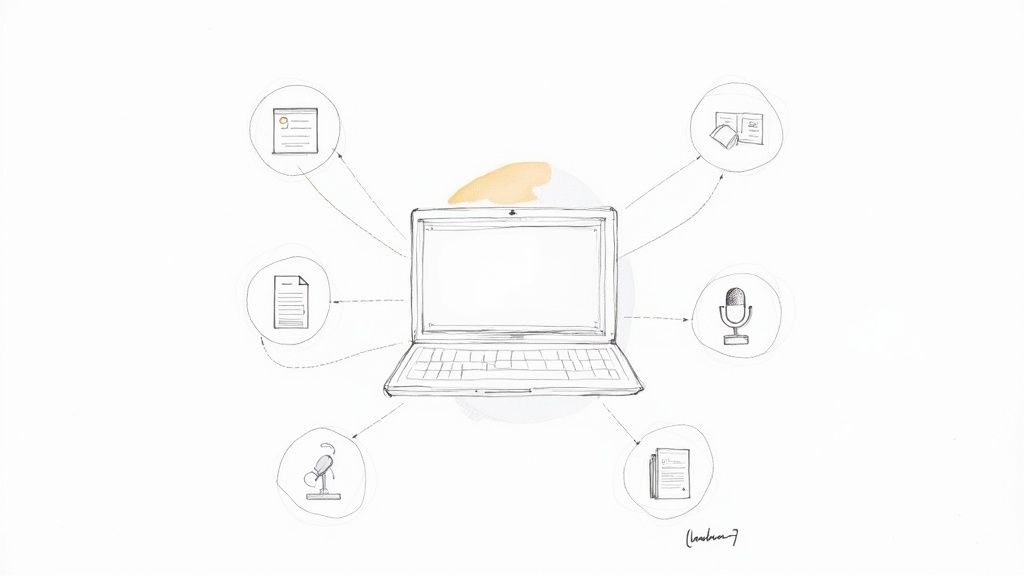
One of the most powerful content repurposing strategies is to transform a single webinar into a comprehensive library of diverse assets. This strategy leverages the significant investment of time, research, and expertise required to produce a webinar by atomizing its content into formats like video clips, blog posts, podcasts, and downloadable guides. Instead of treating a webinar as a one-time event, you treat it as a cornerstone content piece that can fuel your marketing channels for weeks or even months.
This approach is highly efficient because webinars are naturally dense with valuable information, including expert insights, Q&A sessions, and data-driven presentations. By breaking down a 60-minute session, you can extract its most potent elements and tailor them for different audiences and platforms. This maximizes the return on your initial investment, extends the content's lifespan, and drives continuous engagement long after the live event has ended.
How to Implement This Strategy
The goal is to deconstruct the webinar's audio, video, and visual components into standalone content pieces.
- Create Short-Form Video Clips: Isolate the most compelling segments, such as key tips, surprising statistics, or answers to common questions. Edit these into 1-2 minute clips perfect for sharing on LinkedIn, Instagram Reels, or YouTube Shorts.
- Develop a Blog Post Series: Use a high-quality transcript as the foundation for one or more detailed articles. Each major topic discussed in the webinar can become its own blog post, expanding on the concepts with additional research and context.
- Launch a Podcast Episode: Strip the audio from the webinar recording and edit it into a podcast episode. This is a low-effort way to reach an audience that prefers to consume content while commuting or multitasking.
- Design Downloadable Resources: Convert the speaker's presentation slides into a shareable PDF. You can also create a checklist, a quick-start guide, or an infographic based on the key takeaways to use as a lead magnet.
Pro Tip: Invest in a professional transcription service from the start. A clean, accurate transcript is the bedrock for creating high-quality blog posts, quotes, and other text-based assets, saving you countless hours of manual work and preventing errors.
A prime example is Salesforce, which masterfully converts its Dreamforce event sessions and webinars into a vast library of YouTube videos, in-depth blog articles, and podcast episodes. Similarly, Marketo often repackages its expert-led events into on-demand learning content, demonstrating how a single live session can be transformed into a lasting educational resource. This approach validates the webinar not just as an event, but as a content goldmine.
3. Long-Form Content to Video Series
Another powerful method is to convert comprehensive guides, ebooks, or in-depth articles into an episodic video series. This strategy involves taking a substantial piece of long-form written content and breaking its chapters or major sections into standalone videos. This transforms dense, complex information into a digestible and visually engaging format ideal for platforms like YouTube, TikTok, or online course platforms, capturing an audience that prefers watching over reading.

This approach is highly effective because it caters to modern content consumption habits, where video is a dominant medium. By serializing your content, you create a compelling reason for viewers to subscribe and return for the next installment. This model excels at building a loyal community around your expertise, as each video reinforces your authority on the subject while systematically guiding the audience through a complex topic in manageable steps.
How to Implement This Strategy
The goal is to deconstruct your written work into a logical video progression that maintains narrative flow.
- Create a Content Outline: Treat each main section or chapter of your source content as a potential episode. Map out a script or storyboard for each video to ensure a clear and concise presentation.
- Use Animations and Graphics: Enhance viewer understanding by using visual aids like animations, charts, and on-screen text to explain complex data or abstract concepts.
- Optimize for User Experience: On platforms like YouTube, use chapter markers to help viewers navigate longer videos. Create a branded, consistent thumbnail style for the series to make it easily recognizable.
- Incorporate Interactive Elements: Add polls, quizzes, or calls-to-action in your videos and descriptions to encourage engagement and drive viewers to your website or other resources.
Pro Tip: Don't just read your article on camera. Adapt the content for a conversational video format. Use storytelling, compelling visuals, and a direct-to-camera approach to connect with your audience on a more personal level.
For example, educational channels like Crash Course and TED-Ed excel at turning complex academic subjects into engaging, animated video series that are both informative and entertaining. This is one of the most impactful content repurposing strategies for building authority and creating a durable library of evergreen video assets from a single, foundational piece of work.
4. User-Generated Content Curation and Amplification
One of the most authentic and powerful content repurposing strategies involves leveraging the creative output of your own audience. User-Generated Content (UGC) curation and amplification is the process of identifying, collecting, and repurposing content created by your customers, fans, and community members. This turns genuine testimonials, reviews, social media posts, and user creations into high-impact marketing assets that build trust and social proof.
This method works because it taps into the power of authenticity. Consumers trust recommendations from their peers far more than they trust branded advertising. By showcasing real people using and loving your products, you not only fill your content calendar but also build a powerful, community-driven narrative around your brand. It transforms passive consumers into active brand advocates whose voices resonate with potential customers on a personal level.
How to Implement This Strategy
The goal is to create a seamless system for discovering, requesting permission for, and showcasing UGC.
- Create Branded Hashtags: Establish a unique, easy-to-remember hashtag for your campaigns or brand (e.g., #GoPro, Starbucks' #RedCupContest). This makes it simple to track and discover relevant UGC on platforms like Instagram and TikTok.
- Request Permission and Give Credit: Always obtain explicit permission from the original creator before repurposing their content. When you do share it, give prominent credit by tagging their profile, which shows respect and encourages more submissions.
- Repurpose into Various Formats: Curate the best UGC into different marketing materials. Compile positive reviews into a "Wall of Love" on your website, feature customer photos in your email newsletters, or turn video testimonials into compelling social media ads.
- Incentivize Submissions: Encourage participation by running contests, offering prizes, or featuring the best submissions on your official channels. Making users feel seen and rewarded is key to a sustainable UGC pipeline.
Pro Tip: Develop clear and simple submission guidelines for any UGC campaign. Let your audience know exactly what kind of content you're looking for, any rules for participation, and how their content might be used. This clarity prevents confusion and improves the quality and relevance of the submissions you receive.
For example, GoPro has built its entire marketing identity around breathtaking adventure videos submitted by its users. Similarly, Airbnb frequently repurposes stunning guest photography in its advertising campaigns and on its social media feeds, showcasing authentic travel experiences. This approach doesn't just provide content; it builds a vibrant community and validates your brand through the eyes of real people.
5. Data and Research to Infographics and Interactive Tools
Transforming dense data studies, statistical reports, and raw research into visually engaging infographics and interactive tools is one of the most powerful content repurposing strategies available. This approach takes complex information that might otherwise be overlooked in a lengthy report and makes it accessible, understandable, and highly shareable. Instead of expecting your audience to parse spreadsheets or academic papers, you present key findings in a format that encourages exploration and social sharing.

This method thrives because visual content is processed significantly faster by the human brain than text. An infographic can communicate a critical statistic or trend in seconds, while an interactive calculator can provide personalized value, making your data more memorable and useful. This not only boosts engagement but also positions your brand as an authority capable of simplifying complex topics, which is a magnet for high-quality backlinks from other reputable sites.
How to Implement This Strategy
The goal is to translate numbers and findings into a compelling visual narrative that tells a clear story.
- Identify the Core Narrative: Before designing, determine the single most important message your data conveys. Structure your visual around this key insight.
- Choose the Right Format: Use static infographics for summarizing key statistics and trends. Opt for interactive tools like charts, maps, or calculators when you want users to explore the data themselves or find personalized answers.
- Visualize for Clarity: Use charts, icons, and color psychology to guide the viewer's eye and highlight the most important data points. A bar chart is great for comparisons, while a line graph works well for showing trends over time.
- Make it Embeddable and Shareable: Include social sharing buttons and provide a simple embed code so other websites can easily feature your infographic, driving referral traffic and backlinks back to your site.
Pro Tip: Always cite your data sources clearly and transparently within the visual asset. This not only builds trust and credibility but also ensures you are giving proper credit, a key principle of ethical content creation. You can find more information about properly attributing sources to avoid issues on rewritify.com.
For instance, organizations like the Pew Research Center and Statista excel at turning their extensive research into clean, shareable charts and infographics that journalists and bloggers frequently cite. Similarly, financial websites often create interactive retirement or mortgage calculators from complex financial data, providing immense value to their users. This strategy transforms your original research from a static document into a dynamic, engaging asset with a much longer shelf life.
6. Podcast Episodes to Blog Posts and Social Content
Transforming audio from podcast episodes into written articles and social media assets is a powerful strategy for reaching new audiences. This approach takes your conversational, in-depth audio content and makes it accessible and discoverable for people who prefer to read, as well as for search engines that crawl text. By converting your podcast, you cater to different consumption habits and significantly extend the life and SEO value of each episode you produce.
This method is effective because it bridges the gap between auditory and text-based learners. While a loyal listener might enjoy an hour-long interview, a new audience member might discover your brand through a keyword-optimized blog post summarizing that same conversation. This allows you to serve both your existing audio-first community and attract new followers through organic search, turning a single recording into a multi-channel content engine.
How to Implement This Strategy
The goal is to translate the value of your audio into formats that excel in a written context.
- Transcribe and Edit: Use an AI transcription service to quickly get a written version of your episode. From there, edit the text for clarity, grammar, and flow, transforming spoken conversation into a polished, readable article.
- Create Timestamped Show Notes: Develop detailed show notes that act as a table of contents for the episode. Include key topics, guest bios, and links to resources mentioned, with timestamps to help listeners navigate the audio.
- Extract and Design Key Quotes: Pull the most insightful or provocative quotes from the episode. Turn these into visually appealing graphics for Instagram, LinkedIn, or Pinterest to drive engagement and curiosity. For a more in-depth look at optimizing your audio content, check out this comprehensive guide to podcast repurposing.
- Develop Social Media Threads: Summarize a key story or a multi-step process discussed in the podcast into a compelling Twitter thread or LinkedIn carousel post.
Pro Tip: Don't just publish a raw transcript. Restructure the content with clear headings, subheadings, and bullet points to improve readability. Add an introduction and conclusion to frame the conversation as a standalone blog post, ensuring it provides value even without the audio.
For example, Pat Flynn of Smart Passive Income masterfully converts his podcast episodes into comprehensive blog posts, complete with full transcripts, key takeaways, and resource links. This makes his content a goldmine for both listeners and readers. This is one of the most valuable content repurposing strategies because it unlocks the rich, conversational insights from your audio and makes them permanently discoverable through search. To discover more ways to turn discussions into high-performing articles, you can learn more about repurposing audio into text on the Rewritify blog.
7. Email Newsletter to Blog Content and Guides
One of the most underutilized content repurposing strategies is turning your successful email newsletters into permanent, SEO-friendly assets like blog posts and downloadable guides. This strategy capitalizes on the proven value of content that has already resonated with your most engaged audience: your email subscribers. Instead of letting valuable insights, tips, and stories disappear into an email archive, you can give them a second life on your website, where they can attract new audiences through organic search.
This method works because your newsletter often contains your most timely and direct conversations with your audience. By compiling and expanding upon popular newsletter segments, you leverage pre-validated topics. You already know what your core audience finds interesting, which significantly de-risks the time and effort spent creating a comprehensive blog post or a detailed guide. It transforms ephemeral communication into evergreen resources that build your site's authority and can serve as lead magnets.
How to Implement This Strategy
The goal is to thoughtfully expand upon your best newsletter content, not simply copy and paste it.
- Identify Top-Performing Newsletters: Analyze your email marketing data to find newsletters with the highest open rates, click-through rates, and replies. These are your prime candidates for repurposing.
- Combine and Expand on Themes: Group several related newsletters around a central theme to create a single, comprehensive "ultimate guide" blog post. For example, three separate newsletters on email marketing tips can be combined into one definitive article.
- Update and Refresh Content: Before publishing on your blog, update any outdated statistics, examples, or links. Add new information, richer detail, and more context to provide greater value than the original email.
- Create Downloadable Assets: Package a series of popular newsletters into a formatted PDF guide or ebook. You can then offer this as a lead magnet on your blog to capture new email subscribers, creating a powerful content flywheel.
Pro Tip: Wait at least two to three months before republishing newsletter content as a blog post. This gives your email subscribers a feeling of exclusivity and ensures the content feels fresh when it appears on your public-facing site.
Creators on platforms like Substack and email marketing services like ConvertKit are masters of this. They often compile their most impactful newsletter editions into premium guides or themed blog post series. For example, ConvertKit frequently repurposes its creator-focused email tips into in-depth articles on its "Tradecraft" blog, ensuring the valuable advice reaches a broader audience and contributes to their SEO efforts.
8. Customer Case Studies to Multiple Content Formats
Transforming a single customer case study into a suite of diverse content assets is a powerful way to leverage your most valuable form of social proof. This strategy takes a detailed success story, rich with narrative and data, and repackages it for different channels and audience preferences. Instead of a case study existing only as a PDF on your website, it can become a compelling video testimonial, an engaging infographic, a detailed blog post, and a series of impactful social media graphics.
This method works because customer stories resonate on an emotional and logical level. A potential buyer might be skeptical of your marketing claims, but they are far more likely to trust the authentic experience of a peer. By presenting this proof in multiple formats, from a quick visual on LinkedIn to an in-depth webinar discussion, you maximize its visibility and impact, addressing different stages of the buyer's journey and reinforcing your brand's credibility at every touchpoint.
How to Implement This Strategy
The goal is to extract the most compelling elements of the customer's journey and tailor them to formats that highlight specific outcomes and pain points.
- Create Video Testimonials: Film a high-quality interview with your customer. Edit this into a concise 2-3 minute success story for your website and create shorter, 30-60 second clips for social media ads and organic posts.
- Design a "Results" Infographic: Visualize the key metrics and quantifiable results from the case study. A "before and after" comparison or a timeline of achievements makes the data easily digestible and highly shareable on platforms like Pinterest and LinkedIn.
- Write a Narrative Blog Post: Go beyond the formal case study structure and write a blog post that tells the customer's story. Focus on the challenges they faced and how your solution helped them overcome those obstacles.
- Produce Social Proof Graphics: Pull out powerful quotes or impressive statistics (e.g., "Increased revenue by 200%") and turn them into branded graphics for Instagram, Twitter, and LinkedIn.
Pro Tip: When interviewing a customer, go beyond the standard questions. Ask about their personal experience, the "aha!" moment they had with your product, and the specific emotions they felt before and after. These human details make the story far more relatable and memorable.
For example, Salesforce is a master of this, turning its detailed customer studies into high-production "Success Stories" videos that bring the text to life. Similarly, HubSpot often features customer wins in its webinars, providing a live platform for prospects to hear directly from satisfied users. This is one of the most effective content repurposing strategies because it weaponizes your best marketing asset, customer success, across your entire marketing ecosystem.
9. Live Event Content to On-Demand Resources
A powerful method for extending the value of high-investment events is converting live content into a permanent library of on-demand resources. This strategy takes recordings from conferences, webinars, workshops, or product launches and transforms them into accessible assets like session replays, keynote highlights, and downloadable slide decks. Instead of allowing valuable insights to disappear once the event ends, you create an evergreen content hub that continues to generate leads, educate your audience, and boost your brand's authority long after the curtains close.
This approach works because it dramatically increases the return on your event investment. It allows those who couldn't attend live to access the content, while also providing a valuable reference for attendees who want to revisit key moments. By cataloging and presenting this material professionally, you position your brand as a leading educational voice in your industry, creating a resource that attracts new audiences and nurtures existing relationships.
How to Implement This Strategy
The goal is to thoughtfully package your live content for asynchronous consumption, making it as valuable as the live experience.
- Plan for Recording: Before the event, ensure you have a solid plan for high-quality audio and video recording of all key sessions, keynotes, and even booth tours.
- Create Highlight Reels: Edit down long sessions into compelling 2-5 minute highlight reels. These are perfect for social media promotion and email newsletters to drive traffic to the full recordings.
- Organize into a Content Hub: Host the videos on your website or a platform like YouTube. Organize them by topic, speaker, or event track to make navigation intuitive for users.
- Enhance with Supporting Materials: For each session, provide downloadable resources like the speaker's presentation slides, a full transcript for accessibility and SEO, and links to related content.
Pro Tip: Gate some of your premium, full-length session recordings behind a simple form to capture leads. You can offer highlight clips for free to demonstrate the value, then require an email address for access to the complete, in-depth content.
Major tech and innovation conferences are masters of this. Events like AWS re:Invent and Google I/O make nearly all their breakout sessions available on-demand through dedicated digital platforms, complete with searchable transcripts and speaker bios. This is one of the most effective content repurposing strategies for demonstrating expertise at scale, turning a one-time event into a lasting educational asset.
10. Competitor Analysis and Industry Research into Thought Leadership Content
A powerful yet often overlooked content repurposing strategy involves synthesizing raw data from competitive analysis and industry research into authoritative thought leadership content. Instead of just creating content, this approach involves becoming a source of unique industry insights. You are repurposing scattered market data, trend reports, and internal findings into a cohesive, high-value asset that establishes your brand as an expert.
This method works by transforming information into interpretation. Companies are constantly gathering competitive intelligence and market data for internal use. By packaging these findings for an external audience, you provide immense value, answer critical industry questions, and position your brand as a go-to resource. Reports like Gartner's Magic Quadrant are prime examples, repurposing extensive market analysis into a single, influential document that guides purchasing decisions across entire industries.
How to Implement This Strategy
The goal is to move from data collection to insight generation, creating content that others will cite.
- Synthesize Multiple Data Sources: Collate information from market research firms, public financial reports, competitor announcements, and customer surveys. Look for patterns, gaps, and emerging trends that are not yet widely discussed.
- Create Annual Trend Reports: Package your findings into a comprehensive annual or biannual "State of the Industry" report. This creates a flagship content piece that can be updated each year.
- Develop Expert Commentary: Use specific data points from your research to create blog posts, LinkedIn articles, or webinar segments offering your unique take on a market shift or competitor move.
- Visualize Key Findings: Extract the most compelling statistics and trends from your research and turn them into shareable infographics, charts, and social media graphics.
Pro Tip: Always include your own primary data or proprietary analysis to make your thought leadership truly unique. Combining public data with your internal customer insights or survey results adds a layer of originality that competitors cannot easily replicate.
Consulting firms like Deloitte and McKinsey excel at this. They repurpose vast amounts of client work and industry analysis into globally recognized insight reports that define business conversations. This is one of the more advanced content repurposing strategies because it elevates your brand from a participant in the industry to a commentator on it, building immense authority and trust.
10-Strategy Content Repurposing Comparison
| Strategy | Implementation complexity | Resource requirements | Expected outcomes | Ideal use cases | Key advantages |
|---|---|---|---|---|---|
| Blog Post to Social Media Snippets | Low–Medium — formatting & design work | Small team time, design tools, scheduler | More reach, traffic back to post, extended lifespan | Evergreen blog posts and data-rich articles | Fast multiplier of content, low cost |
| Webinar to Multiple Content Assets | High — editing, segmentation, repurposing | Video editors, transcription, designers, marketers | Multi-format library, increased leads, higher ROI | Product demos, expert webinars, lead-gen events | Maximizes ROI from single event; diverse formats |
| Long-Form Content to Video Series | High — scripting and episodic production | Video production, editors, on-screen talent | Higher engagement, subscriber growth, bingeable content | Ebooks, comprehensive guides, courses | Strong audience retention; visual learning format |
| User-Generated Content Curation and Amplification | Medium — discovery, permissions, curation | Community managers, moderation, legal for rights | Authentic social proof, increased engagement, lower content cost | Consumer brands with active communities | High trust and cost-effective content generation |
| Data & Research to Infographics and Interactive Tools | High — data design and tooling | Data analysts, designers, developers | Improved comprehension, shares, backlinks, longer sessions | Research reports, industry studies, surveys | Highly shareable; strong SEO and link potential |
| Podcast Episodes to Blog Posts and Social Content | Medium — transcription and editing | Transcription services, writers, designers | Better SEO, accessibility, social snippets | Interview or topic-driven podcasts | Makes audio searchable and shareable; accessibility |
| Email Newsletter to Blog Content and Guides | Medium — expansion and SEO adaptation | Writers, editors, designers, lead capture setup | Evergreen resources, lead magnets, authority building | High-performing newsletters and subscriber stories | Leverages proven content; generates gated assets |
| Customer Case Studies to Multiple Content Formats | High — interviews and multi-format production | Interviewers, video production, designers, legal | Strong social proof, higher conversions, sales enablement | B2B SaaS, enterprise solutions, success stories | High credibility and conversion potential |
| Live Event Content to On-Demand Resources | High — capture, editing, hosting | AV crews, editors, hosting platform, transcripts | Extended reach, permanent resource library, lead capture | Conferences, product launches, summits | Extends event ROI; accessible for non-attendees |
| Competitor Analysis & Industry Research into Thought Leadership | High — research, synthesis, vetting | Analysts, researchers, writers, datasets | Authority, media attention, backlinks, sales support | Market positioning, B2B strategy, industry insights | Establishes expertise and generates high-value backlinks |
Building Your Content Repurposing Engine
You’ve explored a comprehensive suite of content repurposing strategies, from transforming a single webinar into a dozen unique assets to converting raw data into a compelling infographic. We've moved beyond the simple "slice and dice" mentality and into a more strategic framework. The core principle is clear: your content is not a disposable asset but a valuable, renewable resource. By viewing each piece of content as the potential seed for an entire ecosystem of material, you fundamentally shift from a high-effort, low-return content treadmill to a sophisticated, high-impact content engine.
The journey doesn't end with understanding these tactics. True mastery comes from building a systematic and repeatable process within your organization. This is not about randomly picking a blog post to turn into a video; it's about integrating repurposing into your content creation workflow from day one. When you plan a major research report, you should simultaneously be mapping out the infographics, social media threads, blog posts, and video scripts that will spin off from it. This proactive approach ensures every ounce of effort invested in creating your "pillar" content pays dividends across multiple channels and audience segments.
Key Takeaways for Immediate Action
Let's distill the most critical lessons from this guide into actionable takeaways. The most successful content repurposing strategies are not just about changing formats; they are about adapting the core message to fit the unique context and user expectations of each new platform.
- Audience-Format Fit is Paramount: Never force a format. A technical whitepaper's audience on LinkedIn expects a different tone and depth than a TikTok audience viewing a 30-second video summary. The medium dictates the message's delivery.
- Start with Your Best Performers: Don't repurpose for the sake of it. Begin by identifying your "greatest hits" - the blog posts with the highest traffic, the webinars with the most engagement, or the case studies that generate the most leads. Amplifying what already works is your fastest path to a positive ROI.
- Establish a Workflow: Create a simple, documented process. This could be a checklist or a project management template that your team uses every time a new piece of pillar content is published. It should outline potential repurposing formats, assign responsibilities, and set deadlines. A structured workflow turns an abstract idea into a consistent, scalable operation.
From Strategy to System: Your Next Steps
Putting these ideas into practice is what separates passive learning from active growth. To begin building your content repurposing engine, we recommend a focused, three-step approach. First, conduct a content audit to identify your top 5-10 "pillar" assets ripe for transformation. Second, choose just two or three content repurposing strategies from this list that align best with your team's skills and your audience's preferences. For example, if you have strong design resources, focus on creating infographics from your data. If you have a charismatic team member, prioritize turning articles into short-form videos.
Finally, and most importantly, measure everything. Track the performance of your repurposed assets. Are your repurposed podcast clips getting more engagement on Instagram than your static image quotes? Is the blog post derived from your webinar driving more qualified traffic than the original landing page? This data is your feedback loop. It tells you where to double down and what to abandon, allowing you to continuously refine your engine for maximum efficiency and impact. By adopting this methodical approach, you will not only save immense time and resources but also ensure your brand’s best ideas reach the widest possible audience, driving sustained growth and establishing true thought leadership in your industry.
Ready to streamline your writing process and make repurposing text-based content faster and more efficient? Rewritify is an AI-powered tool designed to help you generate fresh, high-quality, and undetectable versions of your content for any platform. Transform a formal report into a casual blog post or a dense article into a series of social media captions in seconds by visiting Rewritify today.
Relevant articles

Unlock the secrets of influence with our guide to 10 powerful persuasive writing techniques. Learn ethos, pathos, logos, and more to elevate your copy.
Discover copywriting tips for beginners to write persuasive copy, avoid common mistakes, and boost conversions.

Discover 10 powerful examples of visual imagery from literature, ads, and design. Learn how to use visual language to make your content more compelling.

Discover how a powerful AI text enhancer can elevate your writing. Learn to improve clarity, refine your tone, and boost productivity with practical tips.

Discover the top 10 SEO copywriting best practices for 2025. Learn to craft content that ranks higher, engages users, and converts with our expert guide.