10 Corporate Communication Best Practices to Master in 2026
Discover 10 actionable corporate communication best practices for 2026. Elevate your strategy with tips on messaging, feedback, visuals, and more.
In a business environment saturated with noise, generic, top-down messaging no longer commands attention. Effective corporate communication is the lifeblood of a successful organization, acting as the critical link that shapes brand perception, fosters genuine employee engagement, and allows for graceful navigation through crises. Yet, many companies cling to outdated practices, resulting in disconnected teams, a diluted public image, and significant missed opportunities for growth and trust-building. The cost of miscommunication is steep, impacting everything from employee morale to the bottom line. Understanding the current challenges is the first step; next, explore actionable ways to improve workplace communication to meet modern demands.
This article moves beyond the obvious to deliver a comprehensive guide to the corporate communication best practices that are essential for thriving today. We will provide actionable, nuanced strategies that you can implement immediately to create a more resilient and impactful communication framework. Forget vague theories and surface-level tips. Instead, we will dive deep into 10 essential principles that redefine success.
You will learn how to:
- Develop an authentic brand voice that resonates with every audience.
- Implement robust two-way feedback loops for internal alignment.
- Leverage data-driven transparency to build lasting trust.
- Master narrative framing to tell compelling brand stories.
Whether you are refining an internal newsletter, managing a sensitive public relations issue, or planning a major external campaign, these proven practices will equip you with the tools to build a communication strategy that is consistently clear, compelling, and effective. Let's explore the methods that separate leading organizations from the rest.
1. Clear and Concise Messaging
The foundation of all effective corporate communication best practices is the ability to convey information clearly and concisely. This means stripping away jargon, eliminating redundancy, and avoiding unnecessary complexity to ensure your message is understood by everyone, regardless of their role or expertise. Clear communication reduces the risk of misinterpretation, saves valuable time, and significantly improves message retention and engagement.

When a message is straightforward, it respects the audience's time and cognitive load. This principle, championed by usability expert Steve Krug in his book Don't Make Me Think, is just as applicable to internal memos and press releases as it is to websites.
Why It's a Best Practice
Clarity builds trust and credibility. When employees, customers, or stakeholders can easily grasp your message, they are more likely to feel confident in your organization. This approach is particularly critical in external communications, where complex topics must be made accessible. For example, Apple excels at explaining sophisticated technology using simple, benefit-driven language in its product launches. Similarly, Google’s explanations of its search algorithm updates manage to balance technical accuracy with accessibility for a non-technical audience.
How to Implement Clear Messaging
Integrating clarity into your communication strategy requires a deliberate effort to simplify without sacrificing meaning. Here are actionable steps to take:
- Target an 8th-Grade Reading Level: Aim for this level of readability for broad corporate communications to ensure maximum accessibility. Tools like the Hemingway App or Rewritify's built-in analyzers can help you assess and adjust your content.
- Break Down Complex Ideas: Use shorter sentences, with each one conveying a single, distinct idea. This prevents cognitive overload and makes your message easier to follow.
- Use Concrete Examples: Instead of relying on abstract concepts, illustrate your points with specific, relatable scenarios. This makes the information more tangible and memorable.
- Read Your Content Aloud: This simple technique helps you identify awkward phrasing, run-on sentences, and unclear passages that your brain might otherwise skim over.
For day-to-day tasks like email, these principles are essential. You can sharpen your skills by reviewing some key professional email writing tips to ensure every message you send is a model of clarity.
2. Authentic Brand Voice Development
Authentic brand voice is the unique, consistent personality an organization showcases through its communications. It moves beyond generic corporate speak to reflect the company's core values, culture, and mission. Developing an authentic voice is a critical corporate communication best practice because it forges genuine connections, builds trust, and differentiates a brand in a crowded market.
This practice, championed by platforms like Buffer and Mailchimp, treats every communication as an opportunity to reinforce brand identity. When a brand's voice feels human and real, audiences are more likely to listen, engage, and form a lasting loyalty.
Why It's a Best Practice
An authentic voice creates consistency across all platforms, from internal memos to external social media posts. This consistency builds brand recognition and reinforces credibility. For example, Slack's playful and helpful tone is instantly recognizable and makes its product feel more accessible. Similarly, Buffer’s commitment to transparency is reflected in its open, educational voice, which has cultivated a highly dedicated community.
This approach ensures that even when content is repurposed or rewritten, its core personality remains intact. Maintaining this voice is crucial for ensuring brand integrity and making sure the message resonates as intended with the target audience.
How to Implement Authentic Brand Voice
Establishing and maintaining a genuine voice requires a strategic and unified effort across the organization. Follow these steps to cultivate your brand's unique personality:
- Create a Brand Voice Guide: Document the specific attributes of your voice, including tone, vocabulary (words to use and avoid), grammar rules, and core messaging pillars. This guide becomes the single source of truth for all content creators.
- Ensure Team-Wide Adoption: Train all employees, especially those in customer-facing roles, on how to apply the brand voice. Consistency is key to making the voice recognizable and trustworthy.
- Review and Refine: Regularly audit your communications across all channels to check for consistency. Use audience feedback and surveys to understand how your brand's personality is perceived and make adjustments as needed.
- Use Tools for Consistency: When using content generation or rewriting tools, ensure they can adapt to your style. For instance, testing different rewriting modes can help you see how content sounds while ensuring it stays true to your brand's identity.
By mastering your brand's communication style, you can create a more memorable and impactful presence. You can explore the nuances of this further by understanding the key differences in tone of voice in writing.
3. Two-Way Dialogue and Feedback Loops
Effective corporate communication is a conversation, not a monologue. Shifting from a traditional top-down broadcast model to one that actively encourages two-way dialogue and feedback loops is essential for building an engaged and responsive organization. This approach values listening as much as speaking, creating a culture where employees, customers, and stakeholders feel heard and respected.
This best practice transforms communication from a simple information transfer into a powerful tool for intelligence gathering and continuous improvement. As championed by leaders like Microsoft's Satya Nadella, a "listening culture" allows an organization to identify issues, innovate faster, and strengthen relationships by demonstrating that feedback directly influences action.
Why It's a Best Practice
Two-way dialogue fosters a sense of ownership and psychological safety. When individuals know their input is genuinely considered, they become more invested in the organization's success. For instance, Southwest Airlines has built its legendary customer service culture on a foundation of robust internal feedback channels, where employee insights directly shape operational improvements. Similarly, Patagonia’s brand loyalty is reinforced by its responsiveness to stakeholder feedback on sustainability and ethical practices.
How to Implement Two-Way Dialogue
Building effective feedback loops requires more than just asking for opinions; it demands a structured process for collecting, analyzing, and acting on the information received.
- Establish Multiple Feedback Channels: Offer various ways for people to share their thoughts, such as anonymous surveys, dedicated email inboxes, intranet forums, regular town halls, and social media listening.
- Acknowledge and Respond Promptly: Set clear expectations for response times. Acknowledging receipt of feedback is the first step in showing it’s valued, even if a final decision hasn't been made.
- "Close the Loop" Visibly: Publicly share how specific feedback has led to concrete changes. This could be a summary of survey results and subsequent action items or celebrating an employee whose idea was implemented.
- Integrate Feedback into Content Refinement: Use audience questions and comments to improve your messaging. If a memo or policy creates confusion, use the feedback to rewrite it for greater clarity, ensuring it addresses the specific concerns raised.
4. Visual Communication and Multimodal Content
Effective corporate communication best practices extend beyond words alone. Leveraging visual elements like infographics, charts, videos, and diagrams is essential for enhancing understanding and engagement. Visual communication capitalizes on the human brain's ability to process images faster than text, which significantly boosts message retention and emotional impact. A multimodal approach caters to diverse learning styles and modern content consumption habits.
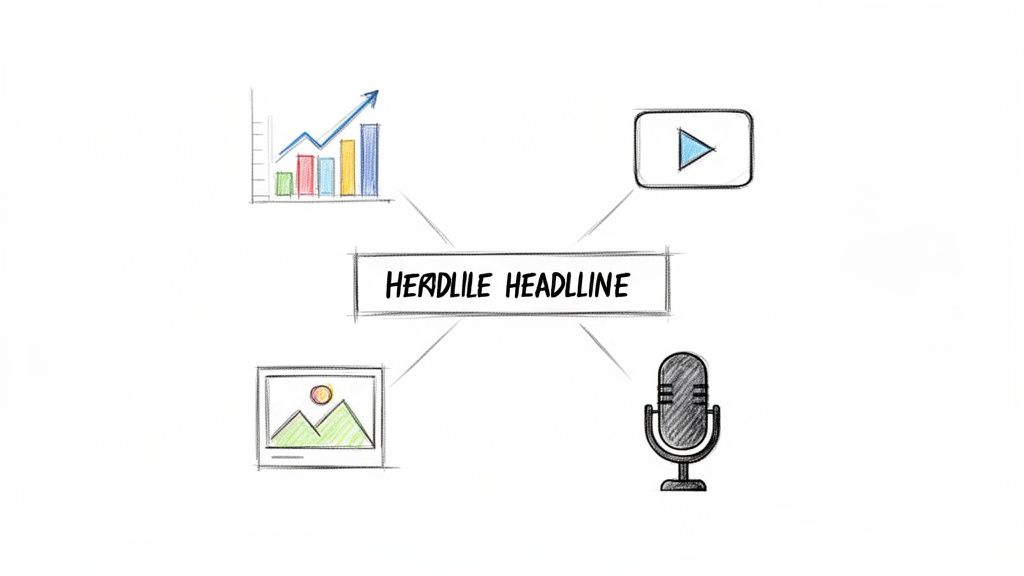
This principle, championed by information design pioneers like Edward Tufte and David McCandless, recognizes that combining clear text with compelling visuals creates a message that is more powerful than the sum of its parts.
Why It's a Best Practice
Visual and multimodal content breaks through the noise of text-heavy communications, making complex information digestible and memorable. It increases accessibility and addresses the preferences of a wide-ranging audience. HubSpot excels in this area, using data visualizations and infographics to make marketing reports and statistics easily understandable. Similarly, TED Talks masterfully combine powerful oratory with simple, effective slides to illustrate complex ideas, proving that visuals amplify a speaker's narrative.
How to Implement Visual Communication
Integrating visuals requires a strategic approach to ensure they clarify, rather than complicate, your message. Here are actionable steps to take:
- Ensure Clarity Across All Modes: Both your text and your visual elements must be clear, accurate, and aligned. Use a rewriting tool to refine captions and accompanying text to be as concise as the visuals they support.
- Maintain a Consistent Visual Style: Develop and adhere to a visual style guide covering colors, fonts, and imagery. This builds brand recognition and creates a cohesive, professional experience across all channels.
- Optimize for All Platforms: Ensure your images, videos, and infographics are properly sized and formatted for different platforms, from desktop intranets to mobile social media feeds.
- Prioritize Accessibility: Use descriptive captions and alt-text for all images. This not only aids visually impaired audience members but also improves your content's SEO performance.
For those looking to enhance their content, you can find more inspiration by exploring powerful examples of visual imagery that make messages more impactful.
5. Storytelling and Narrative Framing
Rather than presenting information as isolated facts or data points, one of the most powerful corporate communication best practices is to organize messages within compelling narratives. Storytelling transforms dry corporate information into memorable, relatable content by creating context, characters, and meaning that connect emotionally with audiences. This technique helps stakeholders understand why a message matters beyond its surface-level details.

This approach, popularized by thought leaders like Simon Sinek with his "Start with Why" framework, leverages the human brain's natural affinity for stories. A well-crafted narrative can make complex ideas accessible, build brand loyalty, and inspire action in a way that data alone cannot.
Why It's a Best Practice
Narrative framing builds a deep, emotional connection that fosters brand loyalty and engagement. When audiences see themselves in a story, the message becomes personal and impactful. Patagonia has mastered this by weaving its environmental activism into every piece of communication, creating a powerful narrative that attracts a loyal community. Similarly, TOMS Shoes built its entire brand on the compelling story of its one-for-one giving model, turning a simple purchase into an act of social good.
How to Implement Storytelling
Embedding narrative into your communication requires a shift from "what" to "why." Instead of just listing product features, tell the story of how it solves a real person's problem.
- Structure Content as a Journey: Frame your message around a protagonist (customer, employee) facing a challenge, discovering a solution (your product or initiative), and achieving a successful outcome.
- Use Specific, Vivid Details: Avoid generalizations. Instead of saying your service is "effective," share a case study with specific details about a customer's success.
- Connect to Larger Themes: Link your company's story to broader cultural values or societal goals, such as innovation, sustainability, or community building.
- Archive and Reuse Narratives: Create a central repository of powerful brand stories, testimonials, and case studies that can be adapted and reused across different channels and campaigns.
6. Consistency Across Channels and Touchpoints
A systematic approach to ensuring that messaging, tone, brand identity, and visual presentation remain uniform across all platforms is a cornerstone of effective corporate communication best practices. This includes every touchpoint, from internal emails and intranet updates to social media profiles, websites, and external press releases. Consistency builds brand recognition, fosters trust, and reinforces your organization’s professional credibility by presenting a unified front.
Inconsistent messaging creates confusion, dilutes your brand's impact, and can ultimately erode stakeholder confidence. This principle of a unified brand experience, championed by experts like David Aaker, emphasizes that every communication either builds or breaks brand equity.
Why It's a Best Practice
Consistency reinforces your core identity and values with every interaction. When customers, employees, and partners receive the same message and experience the same brand personality everywhere, it creates a powerful and reliable impression. For example, Coca-Cola has maintained remarkable consistency in its core brand identity and messaging for decades, making it one of the most recognized brands globally. Similarly, Zappos reinforces its commitment to customer service excellence across its website, support channels, and even its packaging.
How to Implement Consistency
Achieving cross-channel consistency requires a centralized strategy and dedicated tools. To achieve seamless communication and maintain brand integrity, implementing robust, modern content management system best practices is paramount. Here are actionable steps to establish consistency:
- Develop Comprehensive Brand Guidelines: Create a detailed guide covering voice, tone, messaging pillars, visual identity (logos, colors, typography), and editorial standards. This document should be the single source of truth for all content creators.
- Use Content Templates and Frameworks: Standardize the structure of common communications like newsletters, reports, and presentations. This ensures a consistent format and helps creators focus on the message.
- Conduct Regular Content Audits: Periodically review all your channels to identify and correct inconsistencies in messaging, tone, or visual branding. This proactive check helps maintain alignment.
- Establish Approval Workflows: Implement a review process to ensure all published content is checked for brand alignment and consistency before it goes live. This catches potential issues before they can cause damage.
7. Data-Driven Messaging and Transparency
Grounding corporate communications in verified data and evidence, rather than opinion or assumption, is a powerful way to build credibility. This practice involves not just using data but also being transparent about its sources, methodologies, and limitations. Data-driven communication demonstrates that claims are substantiated and empowers audiences to form their own conclusions, fostering a deeper level of trust.
This approach, championed by figures like data visualization expert Edward Tufte and advocates of the Open Data Movement, shifts communication from persuasive rhetoric to verifiable fact. It acknowledges complexity and builds audience confidence, even when the messages are nuanced or difficult.
Why It's a Best Practice
Data-driven transparency is a cornerstone of modern corporate communication best practices because it replaces subjectivity with objectivity. When an organization substantiates its claims with hard evidence, it builds an unshakeable foundation of credibility. This is critical for both internal and external audiences, who are increasingly skeptical of unsubstantiated corporate narratives.
For example, Buffer’s radical transparency in sharing company performance metrics and Pew Research Center's detailed documentation of its survey methodologies both serve to build immense trust with their respective audiences. They are not just sharing conclusions; they are sharing the process, which invites scrutiny and reinforces their integrity.
How to Implement Data-Driven Messaging
Integrating this practice requires a commitment to both rigorous data handling and open communication. Here are actionable steps to make your messaging more data-driven and transparent:
- Always Cite Your Sources: Include direct links to original research, studies, or internal data reports. This simple act allows your audience to verify your claims for themselves.
- Acknowledge Limitations: No data is perfect. Openly discuss margins of error, confidence intervals, sample sizes, and potential biases. This honesty doesn't weaken your message; it strengthens your credibility.
- Visualize Data for Clarity: Use charts, graphs, and infographics to make complex data sets easier to understand. Visual representations can convey trends and insights more effectively than text alone.
- Provide Essential Context: Don't just present a statistic; explain why it matters. Frame the data within a larger narrative that connects to your audience's interests and concerns.
- Correct the Record: If new data emerges that contradicts or updates a previous claim, proactively communicate the change. This demonstrates a commitment to accuracy over being right.
8. Audience Segmentation and Personalization
The one-size-fits-all approach to corporate messaging is no longer effective. Audience segmentation is the strategic practice of dividing stakeholders into distinct groups based on shared characteristics like role, department, or interests. Personalization then involves tailoring messages to meet the specific needs and preferences of each segment, dramatically increasing relevance and engagement. This shows your audience that you understand and value them as individuals.
This principle, central to modern marketing as championed by thought leaders like Seth Godin, is a critical corporate communication best practice. It acknowledges that an engineer, a sales representative, and a C-level executive require different information, delivered in different tones, to feel truly informed and engaged.
Why It's a Best Practice
Personalized communication cuts through the noise. When a message feels directly relevant to the recipient, it is far more likely to be opened, read, and acted upon. This builds a stronger connection and fosters a sense of being understood. For instance, HubSpot excels at this by sending different email marketing content to users based on their industry and role, providing hyper-relevant tips. Similarly, Microsoft communicates product updates differently to its enterprise business clients than to its individual consumer base, ensuring the context and benefits are always appropriate.
How to Implement Audience Segmentation
Integrating segmentation requires a strategic approach to understanding your audience and adapting your content creation workflow.
- Create Detailed Audience Personas: Develop profiles for your key internal and external segments. Document their roles, communication preferences, information needs, and pain points.
- Adapt Tone for Different Segments: Use different writing styles for different groups. For example, a technical update for an engineering team can be direct and detailed, while the same announcement for the sales team should be framed around customer benefits.
- Track Engagement by Segment: Monitor how different groups interact with your communications. Use this data to refine your personas and messaging strategies for future campaigns.
- Start with High-Impact Segments: Don't try to personalize for everyone at once. Identify the most critical audience segments (e.g., senior leadership, all employees, major clients) and build your strategy from there.
For creating different versions of a single message, tools that help you adapt tone and complexity are invaluable. Leveraging a platform to rewrite content for different audiences ensures consistency while enabling powerful personalization.
9. Timeliness and Responsiveness
In today's fast-paced digital landscape, the speed of communication is as critical as its content. Timeliness and responsiveness involve delivering information when audiences need it most, reacting quickly to inquiries and events, and ensuring all communications are current. This practice demonstrates respect for your audience and shows that your organization is engaged and aware, preventing misinformation from filling an information vacuum.
Delayed communication quickly becomes irrelevant or, worse, damaging. The principle of real-time engagement, popularized by figures like Gary Vaynerchuk and amplified by social media platforms, underscores that the window of opportunity to communicate effectively is often very small.
Why It's a Best Practice
Responsiveness builds trust and maintains relevance. In a crisis, a swift, transparent response can mitigate damage and control the narrative, a tactic masterfully used by news organizations during breaking events. Externally, a brand like Buffer that quickly adapts its content strategy to social media algorithm changes shows its expertise and agility. Internally, promptly addressing employee concerns prevents rumors and maintains morale. Failure to act quickly can make an organization appear out of touch or negligent.
How to Implement Timeliness and Responsiveness
Integrating speed into your corporate communication best practices requires preparation and efficient workflows. Here are actionable steps to ensure you are always ready to respond:
- Establish Rapid Approval Workflows: Create a streamlined process for reviewing and approving time-sensitive communications, designating key decision-makers who can act quickly.
- Prepare Response Templates: Develop pre-approved templates and frameworks for common scenarios like crisis statements, FAQs, or social media inquiries to accelerate your response time.
- Balance Speed with Accuracy: Implement quick fact-checking protocols to ensure that even rapid communications are accurate and reliable. A fast but incorrect message can cause more harm than a slight delay.
- Leverage Technology for Speed: Use modern tools to accelerate content creation. For instance, you can use Rewritify's capabilities to quickly transform AI-generated first drafts or raw notes into polished, publication-ready content, significantly cutting down on your production cycle.
10. Accessibility and Inclusive Communication
A core component of modern corporate communication best practices is the commitment to making information accessible to the broadest possible audience. This means intentionally removing barriers that prevent people with disabilities, non-native speakers, or those with varying levels of technical knowledge from understanding and engaging with your message. It encompasses physical accessibility (like captions and alt-text), cognitive accessibility (clear language), and cultural inclusivity (diverse imagery and examples).

This approach goes beyond legal compliance; it is about creating an equitable experience for every stakeholder. By designing for inclusivity from the start, you ensure your communications resonate with and are understood by everyone, fostering a stronger, more inclusive brand reputation.
Why It's a Best Practice
Accessible communication signals respect for your entire audience and expands your market reach. Organizations like Microsoft have made accessibility a cornerstone of their product design and corporate messaging, building deep customer loyalty and setting an industry standard. On a practical level, accessible content is often better for everyone. For instance, captions on videos benefit not only deaf or hard-of-hearing individuals but also users in noisy environments or those who prefer to watch without sound. This practice demonstrates corporate social responsibility and mitigates legal risks associated with regulations like the Americans with Disabilities Act (ADA).
How to Implement Accessible Communication
Integrating accessibility requires a proactive and systematic approach rather than treating it as an afterthought. Here are actionable steps to make your communications more inclusive:
- Provide Text Alternatives: Always include descriptive alt-text for images in emails, on your website, and on social media. For all video content, provide accurate, synchronized captions and a full transcript.
- Use Simple, Clear Language: Avoid jargon and complex sentence structures that can create cognitive barriers. Tools like Rewritify’s Simple mode can help you create accessible versions of technical content for a wider audience.
- Ensure Proper Design Contrast: Use color combinations that are easy to read and avoid using color as the sole means of conveying important information.
- Audit Against Standards: Regularly check your digital content against established guidelines, such as the Web Content Accessibility Guidelines (WCAG) 2.1 AA standards, to identify and fix accessibility issues.
Corporate Communication: 10 Best Practices Compared
| Practice | Implementation complexity | Resource requirements | Expected outcomes | Ideal use cases | Key advantages |
|---|---|---|---|---|---|
| Clear and Concise Messaging | Low–Medium: editing and style enforcement | Editors, style guide, editing time | Better comprehension; fewer misunderstandings | User guides, emails, policy summaries | Increased clarity, accessibility, reduced errors |
| Authentic Brand Voice Development | Medium–High: strategy and training needed | Brand workshops, voice guide, review processes | Stronger brand identity and trust | Marketing, product copy, employer branding | Differentiation, loyalty, consistent personality |
| Two-Way Dialogue and Feedback Loops | Medium: processes and response protocols | Feedback tools, moderation staff, analysis time | Higher engagement; iterative improvements | Employee comms, product development, customer support | Early issue detection, community building |
| Visual Communication and Multimodal Content | Medium–High: design and production workflows | Designers, video/visual tools, higher budget | Increased engagement and retention | Data reports, social media, training materials | Faster comprehension, shareability, emotional impact |
| Storytelling and Narrative Framing | High: requires skilled writers and planning | Creative writing time, story development resources | Greater emotional engagement and recall | Case studies, campaigns, keynote communications | Persuasion, memorability, stronger audience connection |
| Consistency Across Channels and Touchpoints | High: governance and coordination required | Style guides, approval workflows, training | Improved recognition and trust | Large organizations, multi-channel campaigns | Cohesion, scalable quality, easier audits |
| Data-Driven Messaging and Transparency | Medium–High: research and validation needed | Data teams, analysis tools, sourcing and review | Increased credibility and informed decisions | Reports, regulatory comms, thought leadership | Trust, defensibility, reduced misinformation |
| Audience Segmentation and Personalization | High: segmentation strategy and systems | CRM/automation, multiple content variants, analytics | Higher relevance and conversion rates | Targeted emails, role-specific content, campaigns | Improved engagement, efficiency, tailored experiences |
| Timeliness and Responsiveness | Medium: monitoring and rapid workflows | Monitoring tools, rapid-approval teams, staffing | Greater relevance; faster crisis response | Breaking news, customer inquiries, real-time updates | Agility, reputation management, increased trust |
| Accessibility and Inclusive Communication | Medium: standards and testing required | Accessibility expertise, captions/alt-text, testing time | Broader reach; compliance and usability gains | Public-facing content, education, regulated sectors | Inclusivity, legal compliance, improved clarity for all |
Unifying Your Communication for Maximum Impact
Navigating the complex landscape of modern business requires more than just sending messages; it demands the creation of a cohesive, strategic communication ecosystem. The ten corporate communication best practices detailed in this guide are not isolated tactics to be deployed randomly. Instead, they are interconnected pillars that support a unified framework. From ensuring Clear and Concise Messaging in every email to developing an Authentic Brand Voice that resonates in a major press release, each element builds upon the others. The goal is to move beyond disparate communications and cultivate a symphony where every note, every instrument, plays in harmony.
Mastering this symphony is what separates truly influential organizations from those that are simply making noise. When Two-Way Dialogue is actively encouraged, employees feel heard and valued, transforming them into powerful brand advocates. When Storytelling and Narrative Framing are used to convey data, complex strategies become compelling, memorable, and actionable for investors and stakeholders alike. This holistic approach ensures that your communication is not just seen or heard, but that it genuinely connects with people on a human level, building the foundations of trust and loyalty that are essential for long-term success.
From Theory to Strategic Implementation
The true value of understanding these corporate communication best practices lies in their application. It's easy to agree with the principles of Consistency Across Channels or the importance of Timeliness and Responsiveness. The challenge, and the opportunity, is to embed them into your organization's daily operations. This requires a deliberate and sustained effort, starting with an honest assessment of your current capabilities.
Your journey toward communication excellence can begin today with these actionable next steps:
- Conduct a Communication Audit: Review your recent internal and external communications. Where do you excel? Where are the gaps? Assess your content against the principles of Accessibility and Inclusive Communication. Are you truly reaching everyone in your audience?
- Prioritize One Key Area: Don't try to overhaul everything at once. Select one or two practices to focus on for the next quarter. For instance, you could commit to improving your Audience Segmentation and Personalization for your next marketing campaign or implementing structured Feedback Loops for internal announcements.
- Empower Your Team: Great communication is a shared responsibility. Provide your team with the training, tools, and templates they need to uphold these standards. This includes guidelines on brand voice, visual identity, and data transparency.
The Lasting Impact of Exceptional Communication
Ultimately, adopting these corporate communication best practices is an investment in your organization's most valuable asset: its reputation. In an era of information overload, clarity builds confidence, authenticity fosters connection, and consistency creates reliability. When your stakeholders, from employees to customers to investors, know they can count on you for timely, transparent, and empathetic communication, you build a resilient brand that can weather any storm and seize any opportunity.
By committing to this strategic framework, you transform communication from a simple business function into a powerful competitive advantage. You create a culture of understanding, drive alignment toward common goals, and build meaningful relationships that fuel sustainable growth. The path forward is clear: unify your efforts, implement these principles with intention, and watch as your ability to connect, persuade, and lead reaches its maximum impact.
Ready to elevate your written content and ensure every message aligns with these best practices? Rewritify provides the AI-powered tools you need to refine, rephrase, and perfect your communications for clarity, tone, and impact. Visit Rewritify to see how you can scale high-quality, on-brand content creation and turn your communication strategy into a powerful asset.
Relevant articles

Discover our top 8 company bio example formats for websites, social media, and sales. Get templates and tips to write a bio that converts.