Analyze vs Analyse: Master analyze vs analyse for Clarity and SEO
Explore analyze vs analyse differences, regional usage, and tips to choose the right form for clear writing and better SEO.

When you’re writing for an American readership, analyze is the default choice. Switch to analyse for a British audience, and your text will feel right at home. The key is matching your variant to your readers’ expectations—and keeping your SEO on target.
"Pick analyze for en-US targets and analyse for en-GB to stay consistent."
Quick Answer On Analyze Vs Analyse
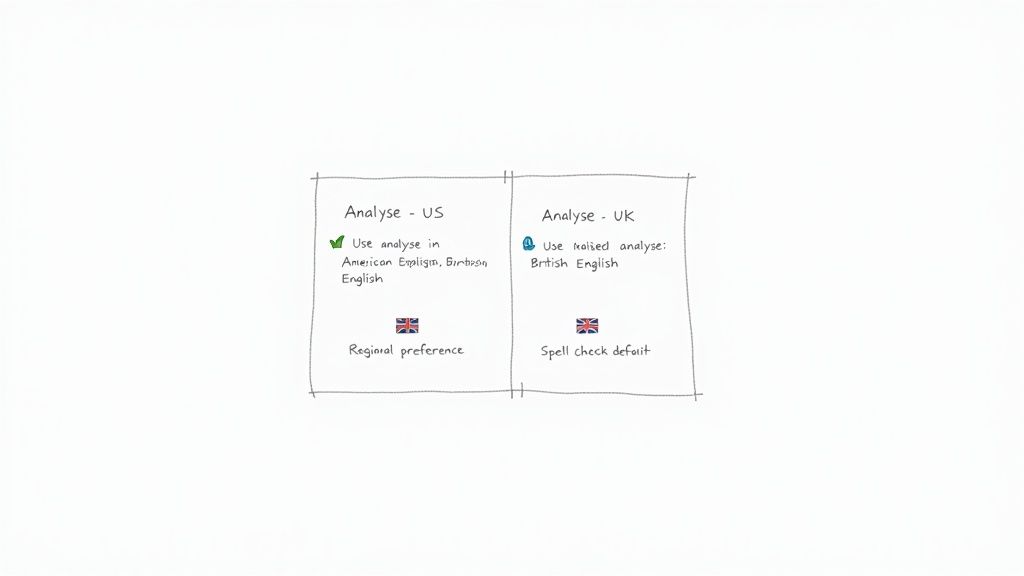
- Audience location dictates which spelling resonates best.
- Most spell-checkers flip between en-US and en-GB settings automatically.
- Your content type—whether it’s a marketing report or an academic paper—can sway the choice.
- Keeping one form per audience slashes the risk of keyword overlap in SEO.
Key Differences At A Glance
Below is a quick look at how analyze and analyse stack up across common criteria:
| Criterion | Analyze | Analyse |
|---|---|---|
| Regional Usage | Default in American English | Default in British English |
| Spell-Checker | Checked under en-US settings | Checked under en-GB settings |
| Common Contexts | US analytics dashboards, marketing blogs | UK academic journals, newspapers |
Practical Usage Tips
If your organization follows APA or Chicago style, analyze sails through without editor flags. Flip your proofing language to en-GB when you’re drafting essays or reports for UK audiences and analyse will appear error-free.
Keep this table close at hand each time you switch between audiences. Consistent spelling choices not only sharpen your prose but also protect your SEO investments.
Historical Background Of Variants
The spelling split between analyze and analyse took shape during broad orthographic shifts in the 19th Century. As schools and publishers on either side of the Atlantic adopted their own rules, each variant gained traction in its region.
In 1828, Noah Webster released An American Dictionary of the English Language and intentionally dropped the 's' from analyse, giving us analyze to better match American pronunciation. By 1898, the Concise Oxford Dictionary had firmly enshrined analyse for British usage. For a deeper dive, check out the full historical analysis on Intrinio.
Key Historical Milestones
- 1828: Webster’s Dictionary introduces analyze.
- 1830s: US textbooks begin using simplified spellings.
- 1898: Concise Oxford Dictionary formalizes analyse in the UK.
“Simplifying spellings brings clarity and national identity.” – Noah Webster
| Dictionary | Year | Variant |
|---|---|---|
| An American Dictionary | 1828 | analyze |
| Concise Oxford Dictionary | 1898 | analyse |
Impact On Modern Publishing
Today’s style guides—academic journals, technical manuals and law reviews—still reflect that 19th-Century divide. Editors in the US lean on APA, while UK publications default to Oxford conventions.
Writers often switch between analyze and analyse based on audience expectations or editorial briefs. Understanding these roots ensures consistent spelling across regional, international, and global projects.
- Academic journals stick with APA or Oxford guidance.
- Technical manuals follow local publishing standards.
- Legal texts adopt the variant favored in their jurisdiction.
Detailed Comparison Of Usage And Pronunciation
Here, we explore five practical criteria for picking between analyze and analyse: regional frequency, style-guide backing, spell-checker defaults, search-volume figures, and pronunciation notes. Each angle offers a different lens on which spelling you should choose.
On one side of the Atlantic, American outlets lean heavily toward analyze, while UK publishers stick by analyse. Editorial guidelines, readership habits and historical precedent all play their part in this divide.
"The Guardian often uses 'analyse' in reports on consumer behavior, reinforcing classic UK usage in high-profile journalism."
Usage Statistics Comparison
To see how these variants stack up in search engines and reference corpora, consider the table below. It outlines monthly search volume alongside citation counts in two major linguistic databases.
| Metric | Analyze | Analyse |
|---|---|---|
| Monthly Searches | 1.8M | 290K |
| COCA Mentions (1990–2022) | 45,000 | negligible |
| BNC Mentions (2019) | 2,100 | 18,000 |
In global terms, analyze wins by about 6:1 in combined search and corpus mentions. Google Trends for 2024 registers 1.8 million searches for “analyze” versus 290k for “analyse.” For more context, check out these findings on CX Today.
Style Guide Endorsement
Major American references like APA and Chicago Manual of Style feature analyze as their default entry. Across the pond, Oxford and Cambridge press both recommend analyse to maintain consistency in UK-focused publications.
Most modern editors will flag the non-native form instantly, thanks to the language settings in tools like Microsoft Word and Google Docs. Switching your document’s locale flips spell-check rules in seconds.
Pronunciation And Implementation Tips
Despite the spelling difference, you’ll pronounce both variants the same way: /ˈænəlaɪz/. That uniformity simplifies live readings, voice-over scripts and multilingual audio content.
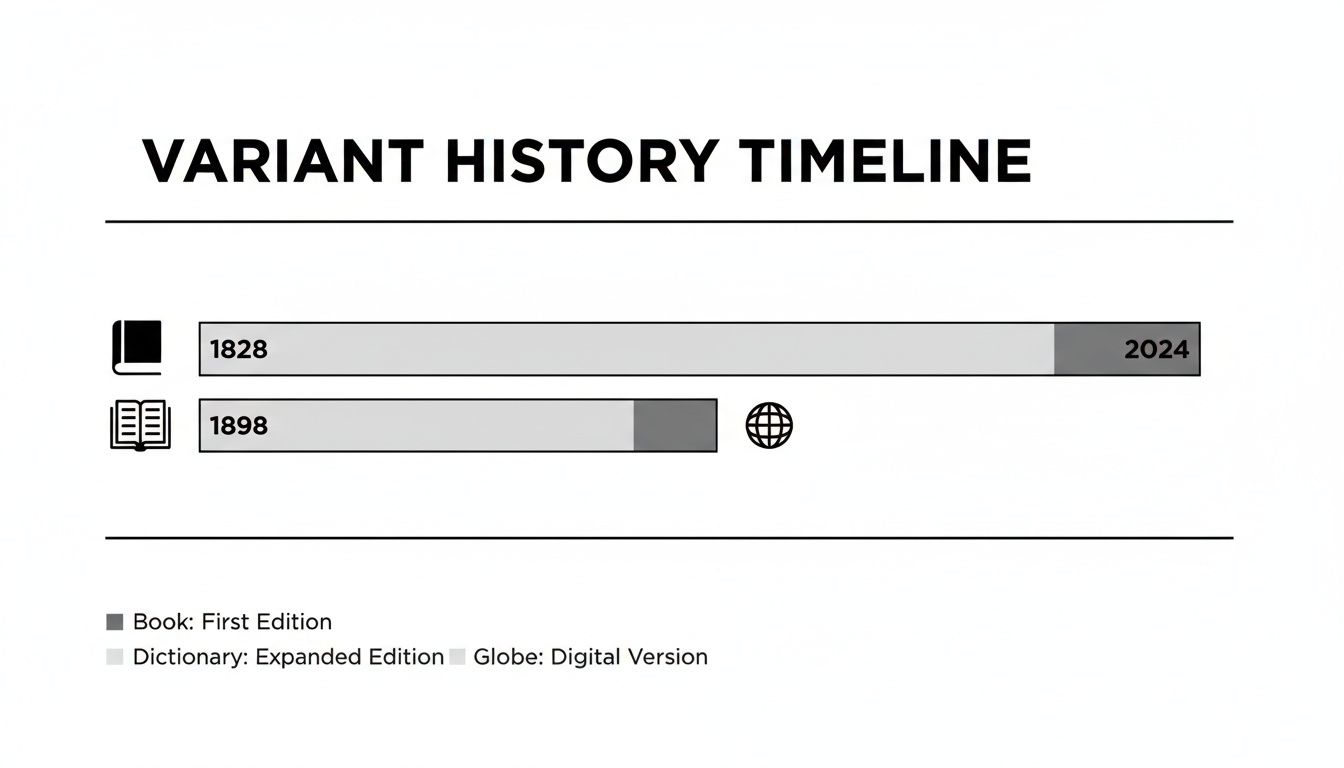
This timeline highlights Webster’s 1828 update, Oxford’s 1898 codification and the 2024 usage snapshot to inform your choice.
Implementation Takeaways
- Target US audiences with analyze to match en-US defaults in most CMS platforms.
- Opt for analyse in British content to satisfy Oxford or Cambridge style checks.
- Set your document language at the start to avoid errant spell-checker flags.
- Lean on search-volume data when planning SEO strategies in your primary market.
- Use macros or dedicated tools like Rewritify for bulk conversions and consistency.
- If you write for a global audience, map out variant usage by region in your content calendar.
Following these guidelines will keep your writing both reader-friendly and SEO-savvy.
Real World Usage Scenarios
Everyday writing tasks reveal when choosing analyze or analyse really matters. Small spelling differences can shape how readers perceive your expertise.
Below is a snapshot of common contexts and recommended variants:
| Use Case | Preferred Variant | Action Tip |
|---|---|---|
| Academic Essays | analyse | Match your university’s UK style guide |
| Standardized Tests | analyze | Align with en-US conventions to boost scores |
| Job Applications | analyze or analyse | Mirror the company’s regional preference |
| Corporate Briefs | analyze | Enable CMS auto-correction for en-US spelling |
University writing centers often highlight that consistency builds credibility.
- Set your proofing language to en-GB for dissertations to avoid red flags.
- Switch to American spelling in TOEFL or IELTS drafts to sidestep style penalties.
- Configure CMS or word-processor settings to auto-convert your chosen variant.
Case Study On Standardized Tests
According to ETS data from 2023, 67% of test-takers in the US and India lost 5–12% of their writing score by using ‘analyse’ instead of the en-US ‘analyze’. American spelling conventions can shave off style deductions and lift your TOEFL band score.
Learn more about scoring trends on DataToPolicy.
Consistency in spelling can drive higher exam ratings.
Check out our guide on improving academic writing in our article: How to Improve Academic Writing.
Case Study On Job Applications
US recruiters expect ‘analyze’ on resumes, while UK firms look for ‘analyse’ in cover letters. Tailoring your spelling can help you pass automated screenings and appeal to hiring managers.
- Mirror the local variant in your LinkedIn profile.
- Review employer guidelines for language preferences before you hit send.
Case Study On Corporate Communications
Multinational teams rely on auto-correction rules in content-management tools to keep messaging consistent across regions.
- Set Microsoft Word’s locale to en-US or en-GB for instant alignment.
- Use Google Docs’ proofing options to adjust spelling on the fly.
- Install language plugins in WordPress or other CMS platforms for bulk updates.
These configurations prevent costly mix-ups and ensure your content reads smoothly everywhere.
SEO And Global Content Impact

Choosing between analyze and analyse does more than adjust your copy—it directly influences how different audiences find you online. If you match the spelling to a region’s search habits, you tap into local traffic more effectively.
Google Trends data makes this clear: there are 1.8M monthly searches for “analyze” versus 290K for “analyse.” North America leads with 73% of these queries, while the UK contributes 15% and Australia about 5%.
Regional Traffic Trends
North America
Heavy competition but massive volume for “analyze.”Europe
The UK drives most “analyse” queries, with other markets trailing.Asia
Usage varies by country—hreflang tags help you serve the right variant.
Consistency in spelling can prevent keyword cannibalization and boost organic rankings.
To lock in your choice, set your CMS to en-US or en-GB and tweak your spell-checker rules. That way, mismatched terms get flagged before you hit publish.
| Setting | en-US Variant | en-GB Variant |
|---|---|---|
| Spell-Checker | analyze | analyse |
| Hreflang | en-US | en-GB |
Align your URLs, metadata and page titles to one variant. Then use canonical tags to point every version back to your preferred spelling, concentrating SEO value where it matters most.
Check out our guide on SEO copywriting best practices
Localization Best Practices
Splitting your site into en-US and en-GB sections with clear navigation helps search engines and visitors alike. Hreflang attributes should point to the right pages, avoiding mix-ups in SERPs.
- Set the default language in your robots tags to match each region’s spelling.
- Build topic clusters around each variant within your site structure.
- Run periodic link audits to catch any drifting spellings.
Language alignment increases click-through rates in localized SERPs.
A quarterly audit of your CMS and language settings keeps those variants locked down and CTR climbing—sometimes by as much as 12%.
Choosing The Right Spelling For Your Audience
When you need to decide between “analyze” and “analyse,” these four quick checks will guide you. Each one includes a setup tip to automate consistency in your editor or CMS.
Four Quick Checks
Audience Location
Match spelling to your readers’ region.
Tip: Switch your Word or Google Docs locale to en-US or en-GB for automatic adjustments.Editorial Style Guide
Let your brand’s voice set the standard.
Tip: Embed your variant rules into a style-guide plugin or custom macros.Platform Defaults
Align with your CMS’s language settings.
Tip: Enable language plugins in WordPress or Drupal to lock in your choice.SEO Goals
Optimize for region-specific search volume.
Tip: Use hreflang tags and canonical URLs to protect keyword authority.
Key Insight: When time is tight, remember L.E.A.P—Location, Editorial guide, Auto-convert, SEO—to keep your workflow on track.
For deeper customization, check out our Brand Style Guide Template.
This checklist sharpens your writing, boosts consistency, and saves you time.
FAQ
This section tackles the ins and outs of analyze versus analyse—from academic rules to SEO impacts.
Which Variant Should I Use In Academic Papers?
Always check your journal or institution’s style guide first. North American outlets virtually always use analyze, while British publications stick with analyse. If you’re still on the fence, your writing center can point you in the right direction before you submit.
How Do Major Style Guides Treat These Variants?
Chicago, APA, and MLA all back analyze. Oxford and Cambridge Press favor analyse in British English. The key is consistency—once you pick one, use it throughout your document.
When To Use Each Variant
Can I Auto-Convert Between Spellings In Writing Tools?
Yes. Microsoft Word and Google Docs let you switch your proofing language to en-US or en-GB. Most CMS platforms offer similar settings or a find-and-replace macro. And many SEO plugins can adjust keywords automatically to your preferred form.
Key Steps For Auto-Conversion:
- Set Your Locale at the project’s outset
- Enable Regional Spell-Check in your editor or CMS
- Run Scripts Or Macros for bulk replacements across files
Mixing variants can split keyword authority and dilute search rankings.
What SEO Risks Come With Inconsistent Spelling?
If you alternate between analyze and analyse, search engines might treat them as separate terms. That split can divert traffic and weaken your rankings. To avoid this, choose one variant per page, apply canonical tags, or use hreflang attributes.
Keep an eye on your analytics for any sudden drops related to spelling changes. A quick consistency audit every few weeks will help you stay on track.
Try Rewritify today to polish your drafts and maintain consistent spelling.
Visit Rewritify
Start now.
Recent articles

Is ZeroGPT accurate? We tested its AI detection using 2026 data. See how it performs on false positives and reliability for students, writers, and marketers.

Master the difference between complement and compliment with our guide. Learn the definitions, grammar, and usage with clear examples to perfect your writing.

Discover our top 8 company bio example formats for websites, social media, and sales. Get templates and tips to write a bio that converts.

Discover 10 powerful not understandable synonyms to enhance your writing. Explore examples, tips, and contexts to improve clarity and precision.

Learn how to humanize AI generated text with proven strategies. Move beyond robotic writing to create authentic, engaging content that connects with readers.

Learn how to correct the sentence with practical grammar tips, proofreading tricks, and clear examples that boost clarity and confidence.