10 Smart Choices for Another Word for Amazed (2025 Guide)
Tired of 'amazed'? Find another word for amazed from our list of 10 powerful synonyms. Elevate your writing with words like astonished, awestruck, and more.

The word 'amazed' is a trusty tool in any writer's vocabulary, but relying on it too heavily can dull your message and flatten its impact. True clarity comes from precision: choosing another word for amazed that captures the exact shade of surprise, shock, or wonder you want to convey. Are you merely surprised, or are you utterly astonished? Is it simple wonder, or are you completely awestruck?
This guide moves beyond generic synonyms to explore 10 powerful alternatives, each with its own unique nuance, strength, and ideal context. We'll break down not just what each word means, but how to use it effectively to make your writing more dynamic, specific, and memorable. Selecting the right term can transform a generic reaction into a powerful, emotional moment for your reader, whether you're crafting a novel, a marketing campaign, or an academic paper.
Beyond choosing strong synonyms, understanding how words shape tone is a crucial part of developing your unique voice in writing, allowing your personality to shine through every sentence. By mastering these distinctions, you'll be equipped to express amazement with the specificity it deserves, captivating your audience and elevating your prose.
1. Astonished (expression of complete surprise and disbelief)
When you need another word for amazed that carries more weight, astonished is an excellent choice. It signifies a profound sense of shock mixed with wonder, often to the point of being momentarily speechless. This word elevates simple surprise into the realm of disbelief, suggesting an event or revelation was so unexpected it temporarily overwhelmed the senses.
Unlike milder synonyms, astonished is best reserved for significant or dramatic occurrences. It implies that what happened has fundamentally shifted someone's understanding or expectations. This makes it a powerful tool in storytelling and descriptive writing to highlight a pivotal moment.
When to Use "Astonished"
Use this term to describe reactions to genuinely mind-boggling events.
- Major Discoveries: "Scientists were astonished by the discovery of a new species in the deep ocean."
- Unexpected Feats: "The audience was astonished when the magician made the building disappear."
- Dramatic Revelations: "She was astonished to learn her quiet neighbor was a world-famous spy."
Quick Tips for Implementation
To maximize its impact, pair astonished with strong, descriptive details. Instead of just saying a character was astonished, describe their wide eyes, dropped jaw, or sudden silence. This enhances the feeling of profound surprise for the reader. Using words like this correctly is crucial for clear communication; improper usage can undermine your message. For more guidance, explore these insights on frequently misused words.
2. Stunned (state of shock and temporary inability to react)
When you're looking for another word for amazed that highlights a physical or mental paralysis, stunned is the perfect fit. This word implies a shock so powerful it leaves a person temporarily unable to speak, move, or even think clearly. It captures a numbing effect, suggesting the mind and body need a moment to process an overwhelming event.
Unlike other synonyms that focus purely on wonder, stunned emphasizes the immobilizing impact of the surprise. It's best used when the shock is so sudden or profound that it causes a momentary shutdown. This makes it incredibly effective for conveying the weight of dramatic news or a sudden, unexpected turn of events.
When to Use "Stunned"
Use this term to describe a reaction of shock-induced paralysis or a complete inability to respond.
- Sudden Bad News: "He was so stunned by the tragic diagnosis that he couldn't form a sentence."
- Unexpected Victories: "The team was stunned into silence when the final buzzer-beater won them the championship."
- Dramatic Confrontations: "She stood stunned as he revealed a secret he had kept for two decades."
Quick Tips for Implementation
To properly convey the impact of being stunned, follow it with a description of inaction or silence. Phrases like "stood frozen," "stared blankly," or "was speechless" reinforce the word’s meaning. Ensuring you use precise language is key to effective communication; slight differences in word choice, such as those between regional spellings, can change your tone. For more on this, you can review this guide on the differences between analyze vs analyse.
3. Awestruck (filled with overwhelming wonder and reverence)
When you are searching for another word for amazed that conveys a sense of profound wonder and respect, awestruck is the perfect fit. This term blends deep admiration and reverence with amazement, often in response to something grand, beautiful, or powerful. It suggests an emotional, almost spiritual reaction that goes beyond simple surprise.
Unlike words that focus on shock, awestruck captures a feeling of being humbled by the scale or magnificence of what is being witnessed. It's the quiet, breathtaking moments of wonder that leave you feeling small in the best way possible.
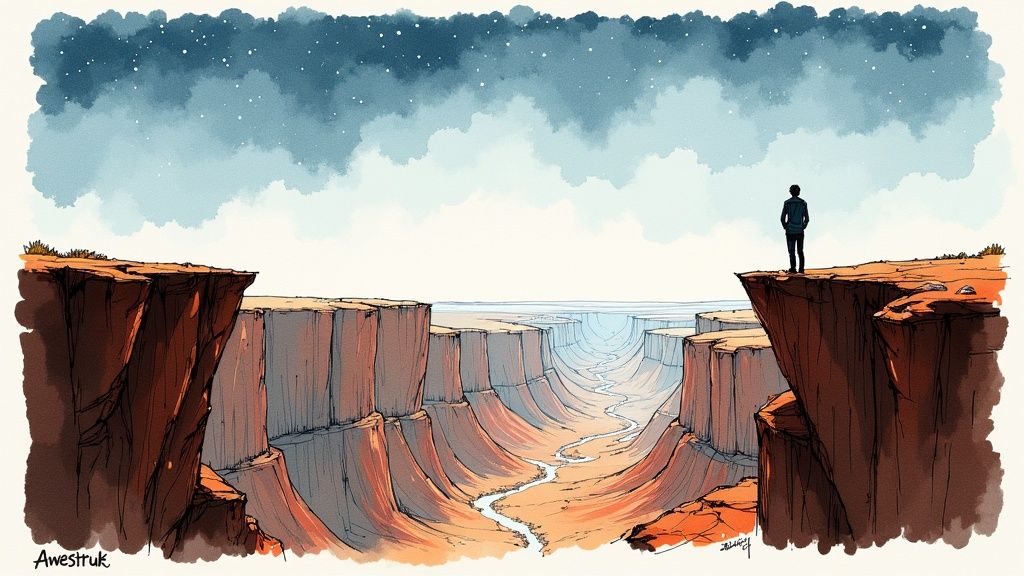
When to Use "Awestruck"
Use this word to describe reactions to phenomena that are grand, beautiful, or artistically magnificent.
- Natural Wonders: "Visitors stood awestruck before the Grand Canyon's vast expanse."
- Artistic Excellence: "The concert audience was awestruck by the orchestra's masterful performance."
- Inspirational Moments: "He was awestruck by the athlete's incredible display of skill and determination."
Quick Tips for Implementation
To properly convey the feeling of being awestruck, describe the environment and the subject’s silent, contemplative reaction. Mention details like a hushed silence, stillness, or an upward gaze to amplify the word's impact. Using such precise vocabulary is key to powerful communication; for more guidance on this, consider exploring these tips to improve academic writing.
4. Flabbergasted (extreme surprise with a sense of indignation or absurdity)
If you're looking for another word for amazed that’s both informal and impactful, flabbergasted is a fantastic option. This word communicates extreme surprise, but it also carries a unique sense of disbelief, often mixed with mild indignation or a feeling that something is utterly absurd. It suggests an event is so far outside the realm of possibility that it leaves you momentarily baffled and perhaps a little offended by its ridiculousness.
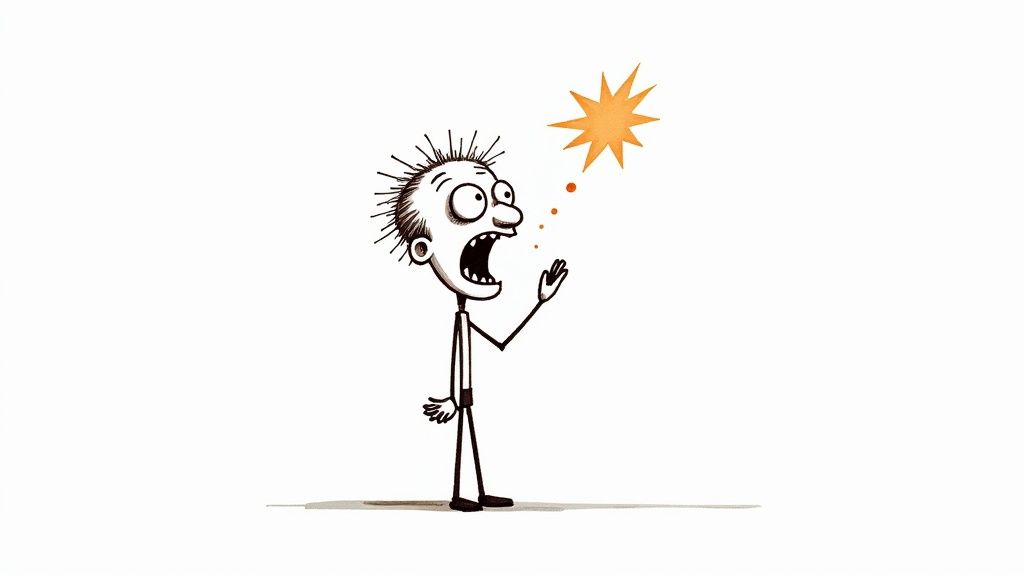
Unlike more serious synonyms, flabbergasted often has a slightly humorous or exasperated tone. It’s the perfect word for situations that are not just surprising but also preposterous, making it a powerful choice for adding personality to your writing, especially in dialogue or first-person narration. It signals a complete and total state of shock.
When to Use "Flabbergasted"
This term is ideal for reactions to events that are both shocking and seemingly nonsensical.
- Absurd Claims: "I was flabbergasted when he claimed he'd never heard of pizza."
- Bold or Outrageous Actions: "The CEO was flabbergasted by the employee's incredibly bold proposal during the meeting."
- Unbelievable Excuses: "She was left flabbergasted by his explanation for being three hours late."
Quick Tips for Implementation
To get the most out of flabbergasted, use it to reveal a character's personality. It works best in informal contexts where you want to highlight a comical or frustrating sense of disbelief. Pair it with descriptions of exasperated gestures, like a character throwing their hands up in the air or shaking their head, to fully capture the word's unique flavor.
5. Dumbfounded (rendered temporarily unable to speak or think clearly)
When searching for another word for amazed that highlights a complete shutdown of cognitive and verbal functions, dumbfounded is the perfect fit. This powerful term describes a state where shock and surprise are so overwhelming that a person is left momentarily unable to speak or even think straight. It emphasizes the physical and mental paralysis caused by an unbelievable event.
Unlike other synonyms that focus on wonder or awe, dumbfounded is rooted in pure, unadulterated shock. The word implies that the situation is so far outside the realm of possibility that the brain needs a moment to catch up, leading to a temporary inability to process or respond. This makes it an effective choice for depicting extreme, unexpected situations.
When to Use "Dumbfounded"
Use this term when a character or person is so shocked they are physically and mentally frozen.
- Sudden Confessions: "The judge was dumbfounded by the defendant's completely unexpected confession."
- Impossible News: "The parents were dumbfounded when their toddler announced they’d won the lottery."
- Absurd Explanations: "I was left dumbfounded by his bizarre excuse for being three hours late."
Quick Tips for Implementation
To properly convey the impact of being dumbfounded, pair the word with physical descriptions of inaction. Mention a character's blank stare, open mouth, or dropped object to visually represent their mental freeze. In dialogue, it’s highly effective to describe a character as dumbfounded just before a long pause or a stammered, nonsensical reply, enhancing the sense of utter disbelief.
6. Astounded (profound amazement with an undertone of disbelief)
When you are searching for another word for amazed that blends shock with a sense of skepticism, astounded is a superb option. It conveys a deep sense of bewilderment, suggesting that an event or piece of information is so surprising it borders on the unbelievable. This word captures a feeling of being completely overwhelmed by something that defies all prior expectations.
Unlike synonyms that express simple wonder, astounded is best used for situations that challenge logic or a strongly held belief. It implies that what has happened is not just surprising but almost impossible to process, making it a powerful word for conveying a strong, almost dumbfounded reaction.
When to Use "Astounded"
Use this term to describe responses to outcomes or facts that seem to contradict what is known or expected.
- Unexpected Victories: "The underdog team was astounded by their victory over the reigning champions."
- Contradictory Findings: "Scientists were astounded by the experimental results, which went against established theories."
- Shocking Confessions: "The jury was astounded when the witness revealed a completely new version of events."
Quick Tips for Implementation
To use astounded effectively, pair it with context that highlights the reason for the disbelief. Explain what the prior expectation was, which makes the outcome seem so unbelievable. For example, instead of just saying, "They were astounded by the results," you could write, "Expecting a minor gain, they were astounded by the data showing a 500% increase." This specificity enhances the impact of profound amazement.
7. Thunderstruck (sudden, powerful amazement as if struck by lightning)
When you need another word for amazed that conveys an almost violent sense of shock, thunderstruck is unparalleled. It uses a powerful metaphor to describe a sudden, overwhelming feeling of surprise that is so forceful it feels like a physical blow. This term suggests an instantaneous and total paralysis of thought and feeling, as if one has been hit by a bolt of lightning.
Unlike synonyms that describe a growing sense of wonder, thunderstruck captures the exact moment of impact. It implies an event so jarring and unexpected that it leaves a person momentarily frozen and unable to process what has just happened. This makes it a highly dramatic word, perfect for highlighting a climax or a life-altering revelation in a narrative.
When to Use "Thunderstruck"
Reserve this term for moments of truly profound and instantaneous shock that fundamentally change a situation.
- Sudden Proposals or Confessions: "He was thunderstruck when she, after years of silence, confessed her love for him."
- Shocking Plot Twists: "The audience sat completely still, thunderstruck by the film’s final, devastating plot twist."
- Life-Changing News: "They were thunderstruck by the news that they had won the lottery."
Quick Tips for Implementation
To use thunderstruck effectively, pair it with descriptions of the emotional or psychological aftermath. Describe the character's stunned silence, their inability to move, or the way the world seemed to stop around them. This reinforces the metaphor of being physically struck and enhances the dramatic weight of the moment for the reader. Using vivid, impactful language like this is key to engaging your audience; for more ideas on elevating your writing, explore these resources on improving sentence structure.
8. Bewildered (amazed in a way that includes confusion or disorientation)
When you are looking for another word for amazed that highlights a sense of confusion, bewildered is the perfect fit. This term describes a state where surprise is mixed with disorientation, leaving a person feeling lost or perplexed. It suggests an event or piece of information is not just unexpected but also difficult to comprehend or reconcile with what is already known.
Unlike words that express pure wonder, bewildered is rooted in cognitive dissonance. It implies that the situation is so strange, complex, or contradictory that the mind struggles to process it. This makes it a nuanced choice for conveying a specific type of amazement where the primary reaction is a mix of shock and mental scrambling.
When to Use "Bewildered"
Use this term when amazement is accompanied by a strong sense of confusion or a lack of understanding.
- Complex or Contradictory Information: "Voters were bewildered by the politician's contradictory statements on the issue."
- Overwhelming Environments: "The tourist stood bewildered in the middle of the bustling, chaotic market."
- Unexplained Phenomena: "He was completely bewildered by the strange lights hovering in the night sky."
Quick Tips for Implementation
To use bewildered effectively, describe the source of the confusion. Don't just state that a character is bewildered; explain what complex system, strange behavior, or illogical event caused their disorientation. This approach grounds the emotion in a specific context, making the character’s reaction more believable and impactful for the reader. This precision is key to powerful communication.
9. Stupefied (amazed to the point of being dazed or unable to think clearly)
When you need another word for amazed that highlights a mental overload, stupefied is the perfect fit. It describes a state where shock and surprise are so intense that they temporarily impair one's ability to think or react. This word goes beyond simple disbelief, suggesting a cognitive shutdown or daze induced by an overwhelming event.
Stupefied implies that the mind has been stunned into a state of bewilderment. It’s an excellent term for conveying not just surprise, but the disorienting aftermath of a shocking revelation or occurrence. This makes it a powerful choice for describing a character's reaction to something truly incomprehensible or reality-altering.
When to Use "Stupefied"
Use this term for reactions to extreme or shocking events that cause a temporary mental fog.
- Sudden Plot Twists: "The audience sat stupefied as the hero was revealed to be the villain all along."
- Unbelievable Outcomes: "Fans were stupefied when their undefeated team conceded five goals in the final minutes."
- Shocking Revelations: "The witness was stupefied by the confession in court, unable to form a coherent sentence."
Quick Tips for Implementation
To effectively convey this state, pair stupefied with descriptions of inaction or impaired perception. Show the person staring blankly, unable to speak, or slow to process what has just happened. This physical description reinforces the mental daze the word implies, creating a more vivid and impactful image for the reader.
10. Gobsmacked (British slang: utterly amazed and shocked, often with humor)
For moments when you need another word for amazed that is both informal and intensely expressive, gobsmacked is a fantastic choice. This British colloquialism paints a vivid picture of someone so utterly shocked their jaw has literally dropped. It combines profound surprise with a playful, often humorous, undertone that makes it perfect for casual communication.
Unlike more formal synonyms, gobsmacked carries a distinct cultural flavor and informality. Its etymology, from "gob" (a slang term for mouth) and "smack," suggests a physical reaction to news so stunning it feels like a light slap to the face. This makes the word feel grounded, relatable, and incredibly human.
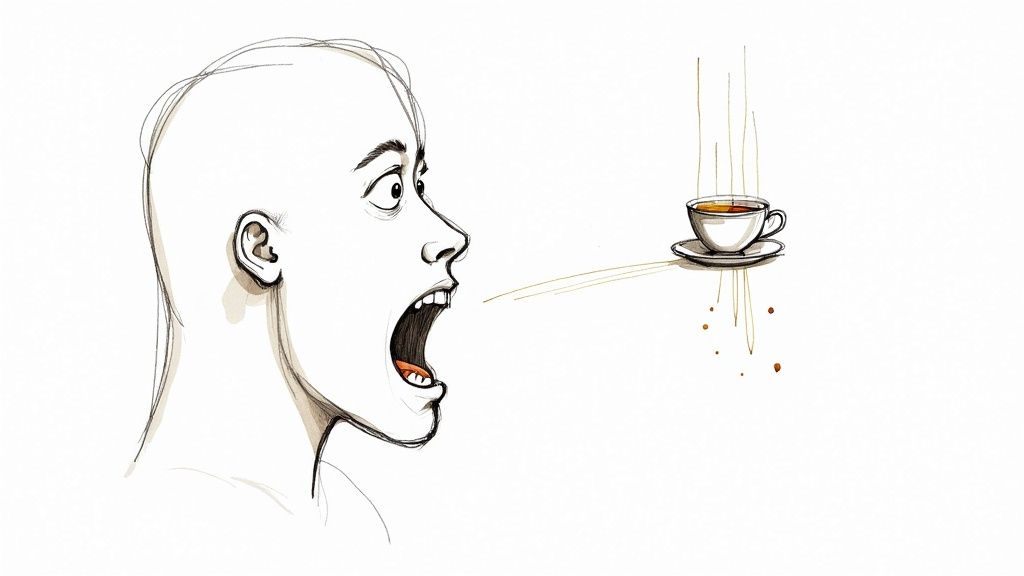
When to Use "Gobsmacked"
Deploy this term in informal settings or to add a touch of personality and regional flair to your writing, especially in dialogue.
- Surprising Personal News: "I was absolutely gobsmacked when I found out she was getting married."
- Unbelievable Outcomes: "The fans were gobsmacked when the underdog team won the championship."
- Comical Shocks: "He was left properly gobsmacked after seeing the ridiculous price tag on a plain white t-shirt."
Quick Tips for Implementation
To use gobsmacked effectively, ensure the context is informal. It shines in dialogue for characters, particularly those from the UK, or in casual storytelling like blog posts and social media updates. Pair it with adverbs like "absolutely," "utterly," or "completely" to amplify the feeling of total shock. This vibrant word adds a layer of character that more standard synonyms for amazed simply cannot match.
Comparison of 10 Synonyms for Amazed
| Term | Intensity | Emotional nuance | Typical context / Formality | Ideal use cases | Key advantages |
|---|---|---|---|---|---|
| Astonished | High | Surprise + disbelief, speechless | Neutral to formal | Major revelations, narrative emphasis | Powerful, vivid, suitable for formal writing |
| Stunned | High | Numbing paralysis, inability to react | Dramatic or negative contexts | Shocked characters, bad-news scenarios | Conveys disorientation and severity quickly |
| Awestruck | High | Wonder + reverence, humble admiration | Positive, descriptive, literary | Nature, art, inspirational moments | Uplifting, depth of appreciation |
| Flabbergasted | Very high | Surprise + disbelief with indignation/humor | Informal, colloquial | Absurd or humorous situations, dialogue | Distinctive, expressive, memorable voice |
| Dumbfounded | High | Loss of speech, blank-minded stunned state | Dramatic or surprising revelations | Moments that render characters speechless | Vividly depicts cognitive shutdown |
| Astounded | High | Amazement with skepticism | Formal/professional settings | Scientific, academic, surprising results | Sophisticated, versatile across contexts |
| Thunderstruck | Very high | Sudden, forceful shock (metaphoric) | Literary or dramatic | Life-changing moments, dramatic twists | Extremely vivid, creates strong imagery |
| Bewildered | Moderate–high | Surprise mingled with confusion/disorientation | Complex or puzzling situations | Confusing events, misunderstandings | Conveys dual emotions clearly |
| Stupefied | Very high | Dazed, impaired thinking from shock | Extreme-shock contexts, sometimes clinical | Aftermath of major revelations | Emphasizes intensive cognitive impairment |
| Gobsmacked | High | Shock + playful humor, colloquial British | Informal, British/Commonwealth usage | Casual dialogue, contemporary fiction | Entertaining, authentic in informal speech |
Choosing the Perfect Word to Express Amazement
Finding another word for amazed is about more than just avoiding repetition; it's about unlocking a deeper level of precision in your communication. Throughout this guide, we've explored the rich tapestry of words that express surprise and wonder. You now have a toolkit that goes far beyond a single, generic term.
By understanding the subtle distinctions, you can elevate your writing from functional to unforgettable. Imagine the difference between saying a character was simply "amazed" versus describing them as "thunderstruck" by a sudden revelation, or "awestruck" before a majestic landscape. The first tells the reader; the second makes them feel the specific emotion.
From Good to Great: Key Takeaways
The journey from a competent writer to a compelling one is built on deliberate word choice. Here are the core principles to remember:
- Context is King: The ideal word always depends on the situation. The comical shock of being gobsmacked is entirely different from the reverent silence of being awestruck. Always consider the surrounding narrative and the emotional atmosphere you want to create.
- Intensity Matters: Not all amazement is equal. The spectrum runs from the profound disbelief of astounded to the complete mental paralysis of stupefied. Use the intensity of your chosen word to control the emotional volume of your writing.
- Nuance Adds Depth: Each word carries its own unique flavor. Bewildered blends amazement with confusion, while flabbergasted often includes a hint of indignation or absurdity. Mastering these nuances allows you to paint a much clearer and more engaging picture for your audience.
Putting Your New Vocabulary into Action
Now that you've explored these powerful alternatives, the next step is to integrate them into your writing process. Don't let this knowledge remain passive.
- Active Review: During your next editing session, specifically search for the word 'amazed' or other common words like 'surprised.'
- Consult Your Toolkit: Challenge yourself to replace them. Ask: What is the exact emotion I want to convey here? Is it shock, reverence, confusion, or disbelief?
- Experiment and Refine: Try out a few different options. Read the sentences aloud to see how each word changes the rhythm and impact. This active practice will build your intuitive sense of which word fits best.
By making this a regular part of your writing and editing workflow, you will develop a more sophisticated and powerful command of the English language. This skill is invaluable for students aiming for academic clarity, marketers crafting persuasive copy, and storytellers seeking to captivate their readers. The ability to choose the perfect word is what separates clear communication from truly resonant writing.
Ready to elevate your writing and effortlessly find the perfect word every time? Rewritify's advanced AI can analyze your text and suggest powerful, context-aware alternatives to common words like 'amazed,' helping you refine your message with precision and style. Explore the full suite of writing tools and transform your drafts at Rewritify.
Recent articles

Is ZeroGPT accurate? We tested its AI detection using 2026 data. See how it performs on false positives and reliability for students, writers, and marketers.

Master the difference between complement and compliment with our guide. Learn the definitions, grammar, and usage with clear examples to perfect your writing.

Discover our top 8 company bio example formats for websites, social media, and sales. Get templates and tips to write a bio that converts.

Discover 10 powerful not understandable synonyms to enhance your writing. Explore examples, tips, and contexts to improve clarity and precision.

Learn how to humanize AI generated text with proven strategies. Move beyond robotic writing to create authentic, engaging content that connects with readers.

Learn how to correct the sentence with practical grammar tips, proofreading tricks, and clear examples that boost clarity and confidence.